

| Why Notre-Dame Needed Restoration |
Notre Dame and Eugène Viollet Le Duc: Notre-Dame de Paris was already an extraordinary medieval monument when Eugène Viollet-le-Duc arrived on the scene, but by the early 19th century, the cathedral was in a deeply precarious condition. Centuries of alterations, neglect, pollution, structural deterioration, and the violence of the French Revolution had left one of Paris’s greatest Gothic buildings badly damaged. During the Revolution, religious symbols and sculptures were destroyed, treasures were looted, and many statues on the western façade were mutilated. The cathedral’s condition became so alarming that authorities eventually considered whether complete demolition might be necessary.
The story of its survival is therefore not simply an architectural story; it is also a story about changing attitudes toward medieval heritage in France. The official history of Notre-Dame explains that the cathedral was considered close to collapse after the revolutionary destruction, while the publication of Victor Hugo’s Notre-Dame de Paris in 1831 helped create a powerful public movement to preserve it.
Enjoy a customized private walking tour covering Notre Dame on the City Island
- From €240 for a 2-hour private walking tour
- Available year-round with morning start times
- Notre Dame pick-up meeting point
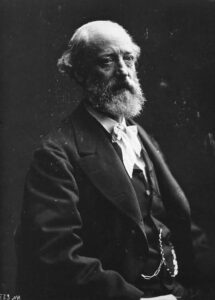
Viollet-le-Duc Vision for Notre-Dame
Eugène-Emmanuel Viollet-le-Duc was born in 1814 and was still relatively young when he became involved with Notre-Dame. He was not a conventional academic architect in the strictest sense; much of his knowledge developed through extensive study and travel, including his observations of medieval architecture in France and Italy. Before Notre-Dame, he had already become involved in important restoration projects, including the Basilica of Vézelay. The official Notre-Dame history describes him as a civil servant of the Historical Monuments and notes that he had directed the restoration of Vézelay at only 26 years old.
His approach was unusually analytical for the period. Rather than treating a medieval building as a collection of picturesque ruins, Viollet-le-Duc examined how its parts fitted together, how materials were used, how structural systems worked, and how the building might have evolved through time. He consulted old drawings, surviving fragments, archival evidence, and comparable medieval monuments. He also worked closely with specialized craftsmen and encouraged workshops to operate near the cathedral so that traditional techniques could be studied and applied.
This approach reveals something essential about Viollet-le-Duc: he was both historian and creator. He wanted to understand medieval architecture scientifically, but he also believed that restoration could involve reconstructing a building according to an architectural logic rather than simply preserving every surviving fragment. That philosophy would become one of the most influential—and controversial—aspects of his career.
A Cathedral in Danger After the Revolution
The situation is particularly interesting because the cathedral was not viewed by everyone in the early 19th century with the same admiration that visitors have today. Architectural tastes had changed dramatically, and Gothic architecture had spent long periods being regarded as old-fashioned or inferior to the classical styles favored by later generations. Parts of Notre-Dame had also been modified according to changing tastes, including interventions during the reigns of Louis XIV, Louis XV, and Louis XVI. The building that Viollet-le-Duc studied was therefore not a perfectly preserved medieval monument waiting to be cleaned; it was a layered historical structure containing evidence of many centuries. That distinction matters when trying to understand his restoration. He was not simply repairing a few broken stones. He was attempting to determine what the cathedral had originally looked like, what had disappeared, what had been altered, and what could reasonably be recreated. His answer would ultimately transform the appearance of Notre-Dame and profoundly influence the modern understanding of Gothic architecture.
A visit to Notre-Dame offers a unique opportunity to explore this fascinating dialogue between medieval craftsmanship, 19th-century restoration, and contemporary preservation. Eugène Viollet-le-Duc (1814–1879) played a defining role in shaping the modern image of Notre-Dame de Paris. A visionary French architect and theorist of medieval restoration, he was appointed in 1844, alongside Jean-Baptiste Lassus, to lead the ambitious restoration project of the cathedral after decades of neglect and damage. Inspired by Gothic architecture, Viollet-le-Duc sought not only to preserve the monument but also to restore its original spirit, sometimes recreating elements that had disappeared over time based on historical research and his own interpretation of the medieval style.
Among his most famous contributions was the reconstruction of the cathedral’s 19th-century spire (flèche), which became one of Notre-Dame’s most recognizable features. He also redesigned the famous chimera gallery, adding the now-iconic gargoyle-like creatures that overlook Paris, and restored numerous architectural details, sculptures, and decorative elements. His approach reflected the 19th-century philosophy of restoration: not simply conserving what remained, but recreating an ideal vision of the monument’s medieval identity.
Although Viollet-le-Duc’s methods have been debated by modern preservationists, his work was essential in saving Notre-Dame from deterioration and transforming it into the symbol of Gothic heritage known around the world today. His legacy remains deeply connected to the cathedral, and his influence was still visible during the restoration following the 2019 fire, when experts carefully studied his drawings and techniques to rebuild the spire and damaged structures.
The Notre-Dame Restoration by Viollet-Le-Duc: 1844–1864
The principal restoration campaign took place between 1844 and 1864, although some associated work continued later in the 19th century. Funding was a major challenge, and the project was interrupted between 1851 and 1859. After Lassus died in 1857, Viollet-le-Duc continued the restoration alone.
The project involved far more than repairing damaged stone. Viollet-le-Duc coordinated stonemasons, sculptors, glassmakers, carpenters, goldsmiths, and other craftsmen to restore the cathedral’s architecture and decoration.
Viollet-le-Duc’s Restoration Philosophy
Viollet-le-Duc did not simply want to preserve what remained. His goal was to recreate what he believed was a coherent Gothic vision of Notre-Dame, using historical documents, architectural research, surviving fragments, and comparisons with other medieval cathedrals.
This approach was innovative but controversial. Some of his additions were not exact medieval reconstructions but 19th-century interpretations inspired by medieval architecture.

The Gallery of Kings
One of the most visible parts of the restoration was the Gallery of Kings on the western façade. Many of its medieval statues had been destroyed during the Revolution.
Viollet-le-Duc and his team recreated approximately 100 statues, taking inspiration from surviving Gothic sculpture at cathedrals such as Amiens, Laon, Chartres, and Reims.
Today, these sculptures form an essential part of the famous façade, even though many are 19th-century creations.
The Restoration of the Interior
Viollet-le-Duc also transformed the interior of Notre-Dame. The restoration included the choir, sacristy, stained glass, liturgical furnishings, decorative metalwork, and medieval polychromy.
The choir was redesigned to emphasize its Gothic character, while the sacristy was reconstructed with a Gothic architectural vocabulary. New works were commissioned from specialized craftsmen, including goldsmiths and glassmakers.

The Famous Notre-Dame Spire
Perhaps Viollet-le-Duc’s most famous creation was the central spire.
The cathedral had previously possessed a spire, but it was dismantled in the late 18th century. Viollet-le-Duc designed a completely new one, inspired by medieval Gothic architecture. Constructed from 1859, it reached approximately 96 meters high and was decorated with statues of the twelve apostles and the four Evangelists.
One fascinating detail is that Viollet-le-Duc gave the statue of Saint Thomas his own face.
The spire was destroyed in the 2019 Notre-Dame fire, but its importance to the cathedral’s identity remains.
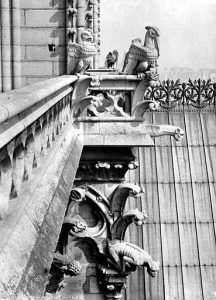
The Famous Chimeras
The strange creatures overlooking Paris from Notre-Dame’s towers are another famous element associated with Viollet-le-Duc.
Although medieval Notre-Dame certainly had gargoyles, many of the famous chimeras visitors recognize today were created during the 19th-century restoration. Viollet-le-Duc used these fantastic creatures to reinforce the dramatic Gothic character of the cathedral.
This is one of the most interesting things to discover when visiting Notre-Dame: not everything that looks medieval is actually medieval.
Why Was Viollet-le-Duc’s Work Controversial?
Viollet-le-Duc’s restoration raised an important question: Should a historic monument be preserved exactly as it survives, or can missing elements be recreated according to historical research?
His approach sometimes involved reconstruction and artistic interpretation rather than simple conservation. Critics therefore questioned whether he was restoring Notre-Dame or creating his own vision of a Gothic cathedral.
Yet his work was based on extensive research into medieval architecture, historical documents, materials, and construction techniques. His restoration helped establish Gothic architecture as an important part of France’s cultural heritage.
Viollet-le-Duc’s Legacy at Notre-Dame
Viollet-le-Duc’s restoration fundamentally changed the appearance of Notre-Dame and shaped how generations of visitors imagined the cathedral.
His spire, sculptures, façade restoration, interior decoration, and Gothic-inspired additions became part of Notre-Dame’s identity. Even though some of these elements were 19th-century creations, they are now an important part of the cathedral’s history.
This is what makes Notre-Dame so fascinating. It is not simply a medieval monument. It is a building shaped by the Middle Ages, the French Revolution, the 19th-century Gothic Revival, and modern conservation.
Conclusion
The restoration of Notre-Dame by Eugène Viollet-le-Duc in the 19th century was one of the most important restoration projects in French architectural history. Between 1844 and 1864, Viollet-le-Duc and his team repaired and recreated major architectural and decorative elements while giving the cathedral a renewed Gothic identity. His work remains controversial because some of what we see today was 19th-century interpretation rather than medieval survival. Yet that restoration is now itself part of Notre-Dame’s history. When you visit the cathedral, look beyond its medieval origins. The Gallery of Kings, chimeras, interior decoration, and former spire tell another fascinating story: the story of how 19th-century France rediscovered, restored, and reinvented its medieval heritage.
Discover Notre Dame private tour page with a licensed private guide.
Emy,
Frequently Asked Questions
Was Viollet-le-Duc the original architect of Notre-Dame?
No. Notre-Dame was primarily constructed between the 12th and 14th centuries. Viollet-le-Duc was the 19th-century architect responsible for its major restoration.
When did Viollet-le-Duc restore Notre-Dame?
The principal restoration campaign took place from 1844 to 1864, with additional related work continuing later.
Did Viollet-le-Duc create the Notre-Dame spire?
Yes. He designed the famous 19th-century spire, which was completed around 1860 and destroyed in the 2019 fire.
Are Notre-Dame’s chimeras medieval?
Many of the famous chimeras on the towers were created during Viollet-le-Duc’s 19th-century restoration, rather than being original medieval sculptures.
Why is Viollet-le-Duc important?
Viollet-le-Duc helped save Notre-Dame from serious deterioration and profoundly influenced the way Gothic architecture and medieval heritage were understood in France.
