
Île de la Cité and Île Saint-Louis Private Tour – Two Natural Islands
The Île de la Cité and the Île Saint-Louis, are two natural islands on the Seine River. The Île de la Cité is the heart of Paris and where the city was founded. Around the year 200 B.C., the Parisii lived on the Île de la Cité until the Romans conquered the area The Parisii were a Gallic people settled in the current Paris region, which gave its name to the city of Paris. According to Caesar (53 BC), their main city (oppidum) would have been Lutetia (Paris). Lutèce is the Frenchified form of the name used by the Romans Lutetia or Lutetia Parisiorum to designate the Gallo-Roman city known today as Paris. During the Roman conquest of Gaul, the Parisii took part in the resistance movement to Caesar organized by Vercingetorix, in 52 BC. The borough grew and prospered until it became the capital of the empire of the Franks in 508 and was renamed Cité. As a fortified city, the island was continually attacked by the Normans. Throughout the Middle Ages, the island had a large population and became a military, cultural and spiritual center in France.
From €360 – USD $390 up to 6 persons upon level of customization
- 3 hours private tour guide with stops and highlights
- Official licensed guides English Speaking
- Hotel pick up and Drop off at your convenience
- Online Booking and Credit Card Payment
Île de la Cité Private Tour
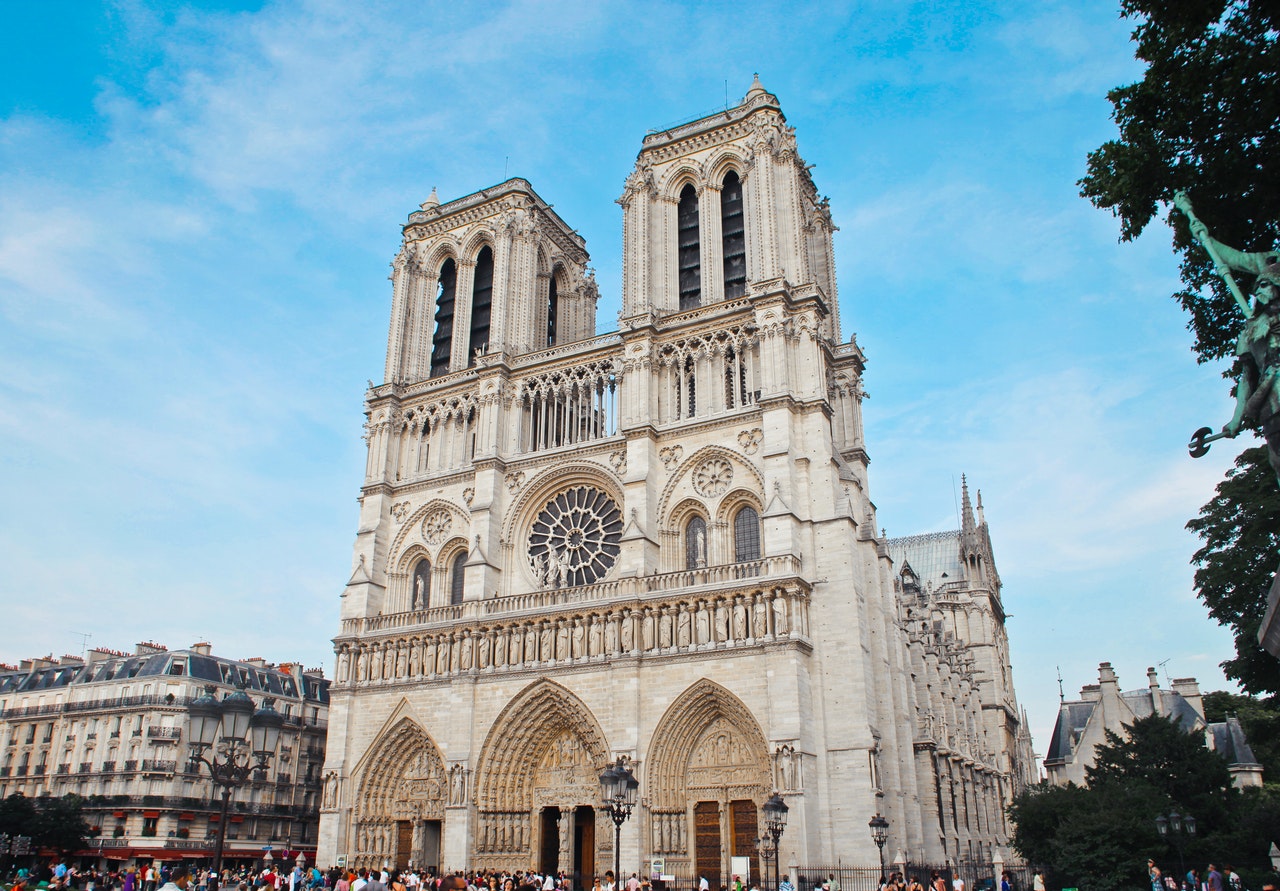
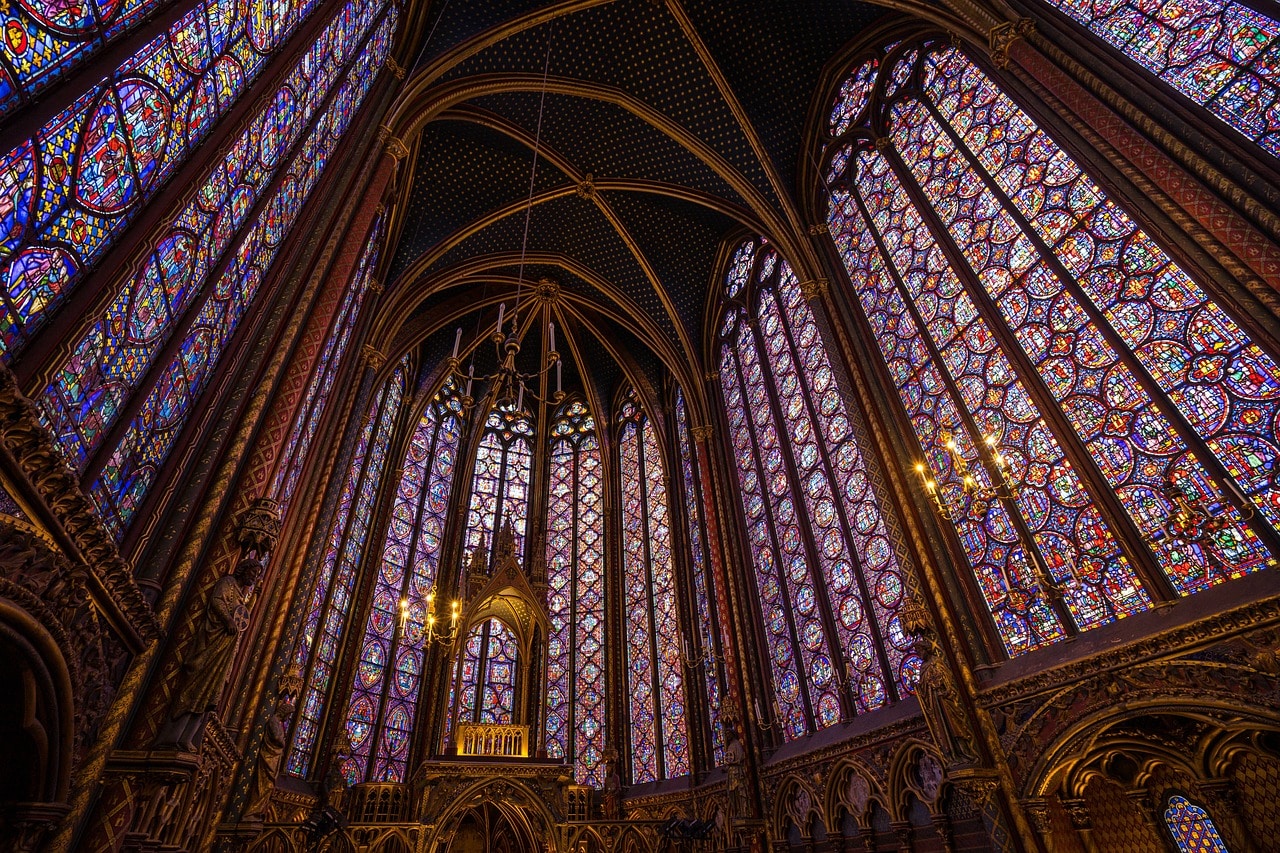
The Île de la Cité is a natural island in the Seine with an area of 22.5 hectares (54 acre) . Île de la Cité is the very center of Paris and the location where the medieval city was refounded, certainly the oldest part of Paris or Lutèce for its first name. The Île de la Cité is one of the most beautiful neighborhoods in Paris, with some of the main landmarks, like Notre Dame Cathedral, the Sainte Chapelle and the Conciergerie.
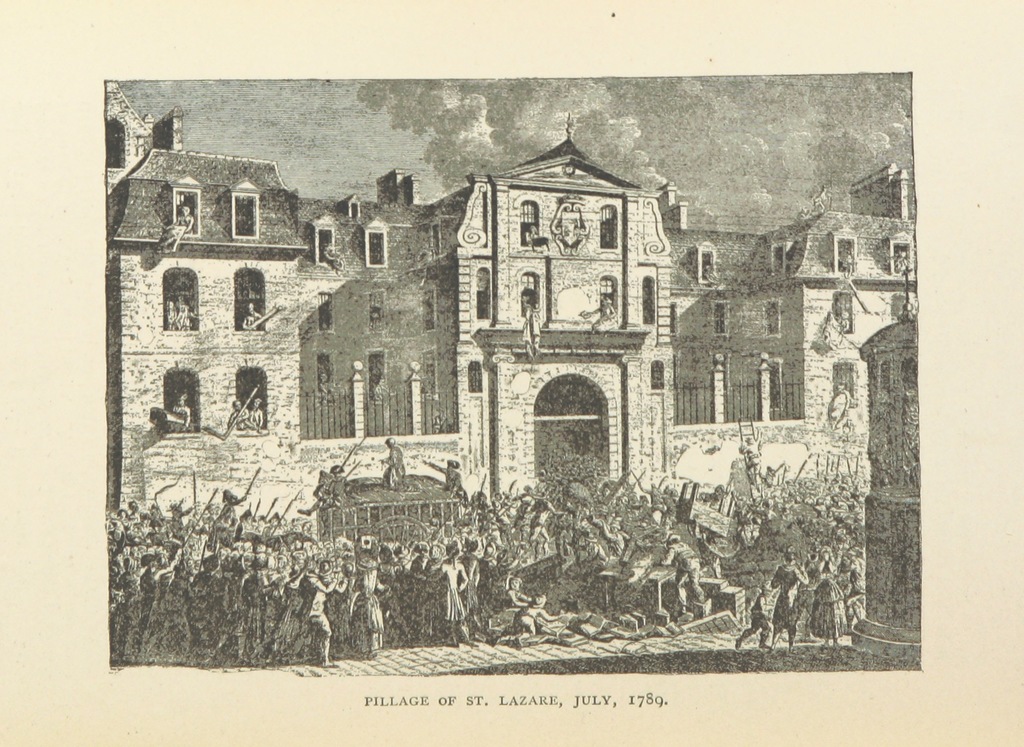
The story of Île de la Cité is essentially the story of Paris itself. Few places in Europe compress over two millennia of history into such a compact area. The island witnessed Roman conquest, medieval royal power, religious transformation, revolutionary violence, and modern urban redesign. Every century left fingerprints on its streets.
During the early medieval period, the island became increasingly fortified due to Viking raids. The Seine River functioned both as protection and vulnerability because invaders could navigate directly toward Paris by boat. Massive defensive walls and towers transformed the island into a military stronghold. These fortifications allowed Paris to survive repeated attacks and eventually emerge stronger as the capital of the Frankish kingdom.
The rise of the French monarchy elevated the island’s importance even further. The Palais de la Cité, once the royal residence of French kings, dominated the island politically. Over time, parts of this palace evolved into the Conciergerie, later infamous during the French Revolution as the prison where Marie Antoinette spent her final days before execution. Walking through these halls today feels haunting because history suddenly becomes tangible rather than abstract.
Religious influence also shaped the island profoundly. Construction of Notre-Dame began in 1163 and continued for nearly two centuries. The cathedral became both a spiritual symbol and an architectural achievement demonstrating the ambition of medieval Paris. Nearby, the stunning Sainte-Chapelle dazzled worshippers with stained glass windows designed to resemble heaven itself.
In the 19th century, Baron Haussmann dramatically reshaped much of Paris, including sections of Île de la Cité. Many medieval buildings disappeared to create wider boulevards and administrative buildings. Yet despite these changes, the island retained its essential identity. It remains a place where medieval Paris still breathes beneath the modern city.
City Island Highlights
Marché aux fleurs – Flower and birds market
The flower and bird market in Paris was created in 1808. It is on Place Louis-Lépine (former Parisian prefect who gave his name to the competition of inventors of the Paris Fair) that the famous Flower Market is located. and at Les Oiseaux in the 4th arrondissement, just outside the Cité metro station. It is made up of 1900 period pavilions and offers an impressive number of flowers, plants and shrubs of all kinds. It remains authentic despite the passing years. This Flower and Bird Market welcomes several varieties of birds every Sunday, as well as accessories, animal food, rodents, fish…
Place Dauphine
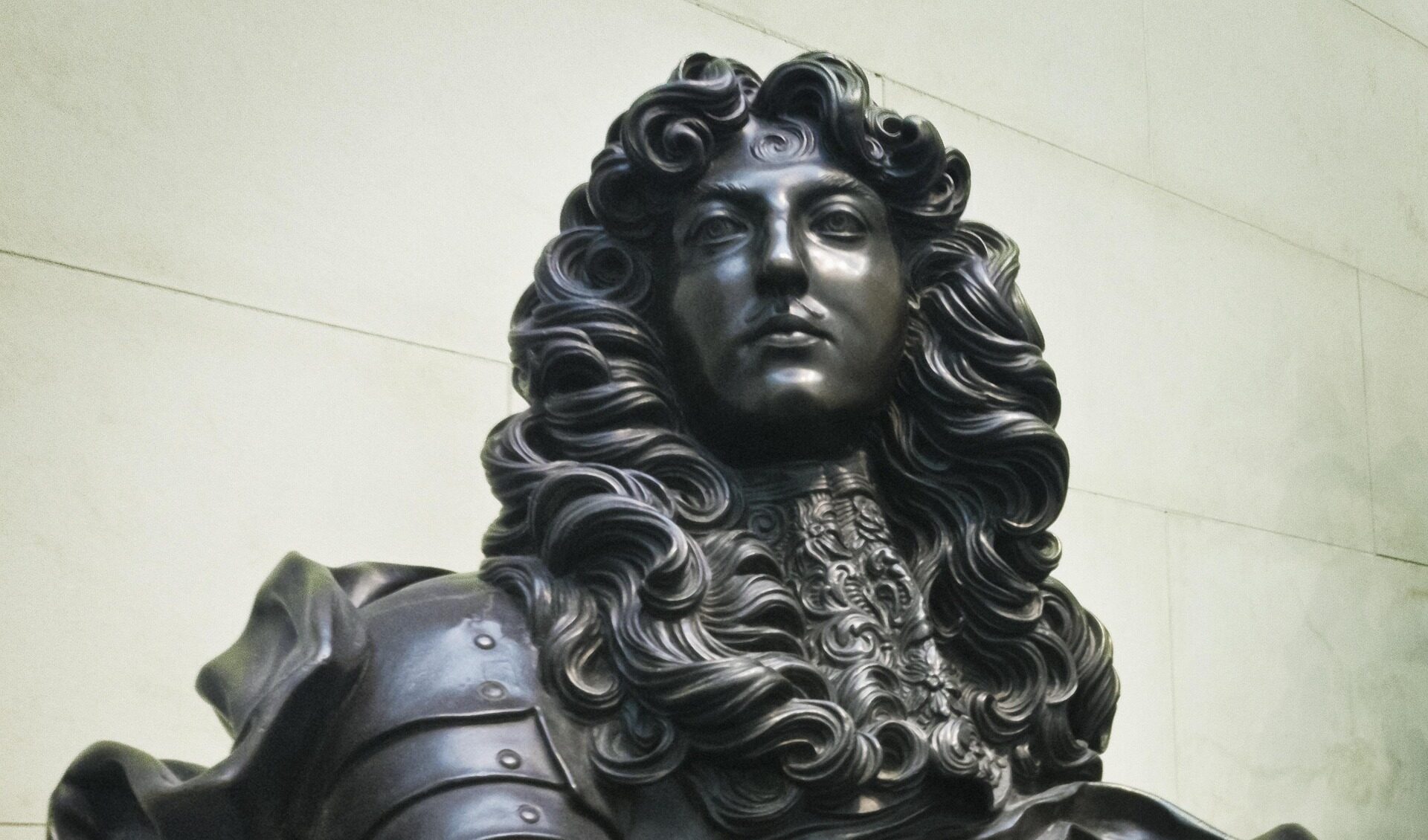
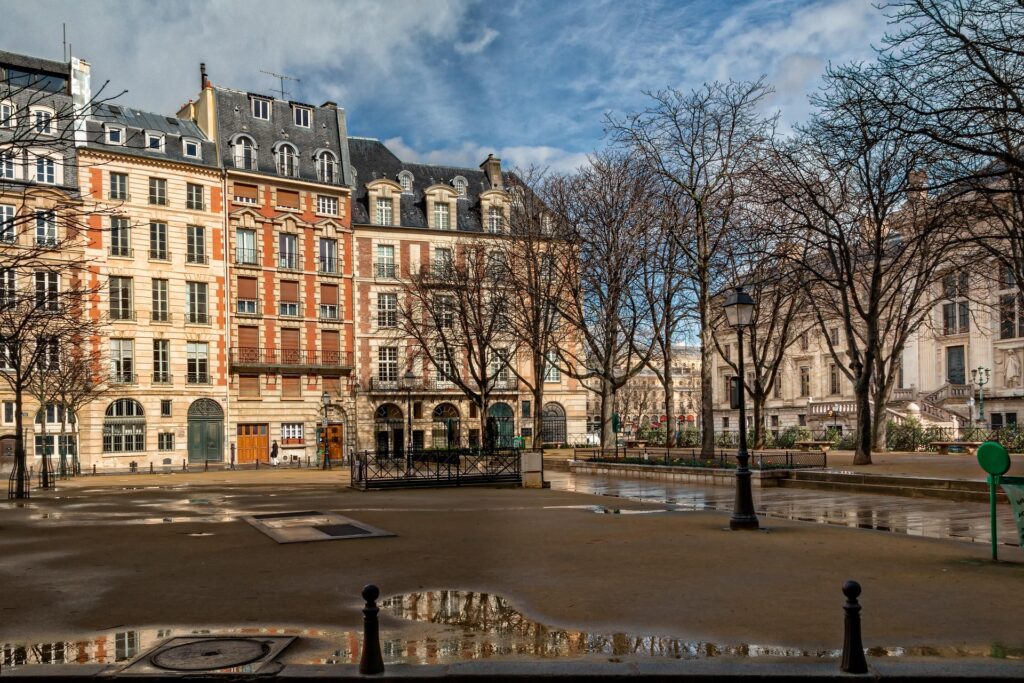
Place Dauphine was born from the merger of several small islets that shared the landscape until the end of the 16th century. Place Dauphine is a square in Paris that takes its name from the Dauphin, the future King Louis XIII, father of the Sun King Louis XIV. It is located in the 1st arrondissement, on the Ile de la Cité, to the west of the former Palais de la Cité. It adjoins on its other side, at the tip of the triangle it forms, the middle of the Pont Neuf, where the equestrian statue of King Henri IV (1553-1610) faces it. Remarkably, this general layout has remained unchanged for over 400 years. Another rare feature of Place Dauphine is that the buildings were built for merchants and commoners rather than the elite like other architectural developments of the period like Place des Vosges. Along with Place des Vosges, Place des Victoires, Place Vendôme and Place de la Concorde, it is one of the city’s 5 royal squares. The square is actually in the shape of a triangle. The thick walls of the buildings surrounding the space on three sides provides sound protection and contributes to Place Dauphine’s tranquil atmosphere. In addition to idyllic park space, a handful of charming cafés and restaurants line the square, and offer ideal spots for enjoying a leisurely lunch or a café. The central square, covered with sand and surrounded by cobbled streets, offers an ideal playground for all pétanque players, who do not fail to meet in this open-air haven of peace. Populated with trees and small benches, Place Dauphine is one of those typically Parisian places that have no equivalent.
La Cour de Cassation
Although the modern institution, born during the Revolution, only became the Court of Cassation in 1804, it has been rooted in French judicial history since the Capetians, since it is the direct heir of the “Sovereign Court of Parliament” or Parliament of Paris, which overturned the judgments of the bailiwicks and provosts. Thus, some traditions such as the magistrates’ robes have remained, while its current organization is also derived from the centuries-old history of French justice. The Court of Cassation is the highest jurisdiction of the French judicial order. In the latter, it is the counterpart of the Council of State in the administrative order. It is a permanent court, which sits at the Paris courthouse, at 5, quai de l’Horloge. This Court can pronounce the cassation and the annulment of court decisions which are rendered at the cost of a misunderstanding of the law, or conversely reject the appeal, making the contested decision final.
Le Pont Neuf
The Pont Neuf (New bridge in French), despite its name, is currently the oldest existing bridge in Paris. It crosses the Seine River at the western tip of the Ile de la Cité. Built at the end of the 16th century and finished at the beginning of the 17th century, it owes its name to the novelty that constituted at the time a bridge devoid of dwellings and provided with sidewalks protecting pedestrians from mud and horses. It is also the very first stone bridge in Paris to entirely cross the Seine. This monument has been classified as a historical monument since 1889. In 1991, it was listed as a UNESCO World Heritage Site, along with all the banks of the Seine in Paris. This site is served by the Pont Neuf metro station.
Saint Louis Private Tour
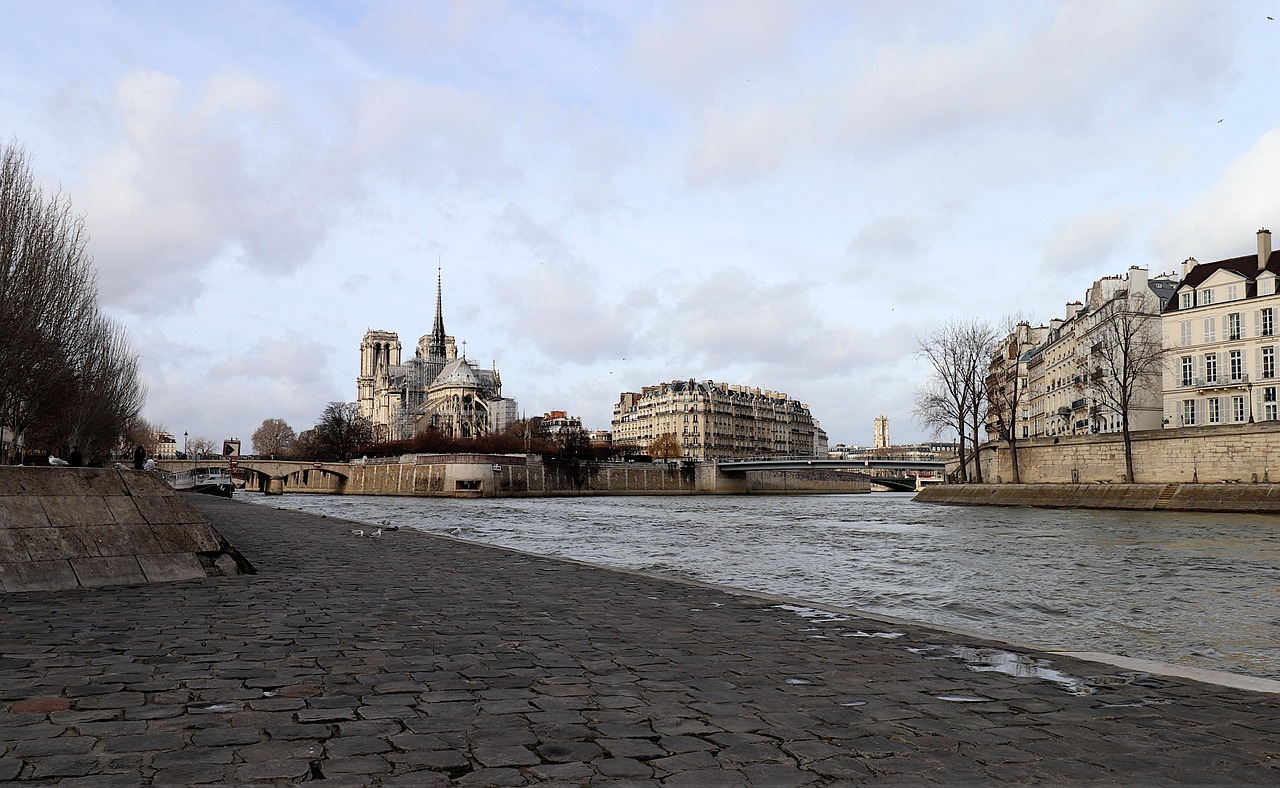
Strolling along the banks of the Seine, you can admire the architecture unchanged for 400 years on the Île Saint-Louis, often in the shadow of its neighbor, the Île de la Cité. Located immediately upstream of the Île de la Cité, it is the smaller of the two with an area of 11 hectare (27 acre). It takes the form of a parallelogram of 525 m on its long side and 250 m on its short side, oriented in a general direction towards the northwest. Since 1725, Île Saint-Louis has been named after Louis IX, nicknamed Saint-Louis. Legend has it that the King of France went there to pray and dispense justice. In 1269, it was on this island that he took the cross with his knights before leaving for the eighth crusade, the very one that would be fatal to him. Saint-Louis died of dysentery before Tunis in August 1270.
In the Middle Ages, its inhabitants were cows in 867, under Charles the Bald. Located upstream from the Île de la Cité, Île Saint-Louis was a pasture area for the herd of the canons of Notre-Dame. It also serves as a warehouse for the construction of boats during the reign of the Carolingians. In 1356, in the continuity of the surrounding walls of Philippe Auguste, a channel was dug and divided the island in two: to the west, Île Notre-Dame and to the east, Île aux vaches.
After the assassination of the king Henri IV by Ravaillac, it was Louis XIII (1601-1643), son of Henri IV and Marie de Médicis, who relaunched this urbanization project. After the creation of Place Royale (future Place des Vosges) and the development of the Marais, Île Notre-Dame and Île aux Vaches were reunited again in 1614. The general contractor for Les Ponts, in charge of the works, is called Christophe Marie. It gives its name to the bridge that connects the island to the mainland to the north. With his two partners, Poulletier and Le Regrattier, they filled in the banks and filled in the canal, giving rise to the quays: Anjou and Bourbon to the north and Béthune and Orléans to the south.
Houses are built throughout the 17th century. Parliamentarians, magistrates and financiers wish to have private mansions on the banks of the Seine. We then see the rise, under the direction of the architect Louis le Vau, of the remarkable Hôtel Lambert and Hôtel de Lauzun quai d’Anjou. Île Saint-Louis has been home to many personalities, politicians, writers and artists. At 22 quai de Béthune, in the 1840s, you could meet Charles Baudelaire, who published Les Fleurs du mal in 1857. At number 36, the first woman to hold a Nobel Prize, Marie Curie, lived from 1912 and 1934. And it is from this same address that René Cassin left one day in 1968 to collect his, a Nobel Peace Prize. Still quai de Béthune, at number 24, President Georges Pompidou breathed his last in 1974.The other quays are not left out. Let us mention the presence of the sculptor Camille Claudel, muse of Rodin, at 19 quai de Bourbon, from 1899 to 1913, the date on which her career as an artist ended and her confinement began. At 33 quai d’Anjou, a mythical address that no longer exists today welcomed bartenders, laundresses but also artists and writers. Between 1904 and 1953, at one of the tables of the restaurant Au rendez-vous des mariniers, you could greet Céline, Mauriac, Dos Passos, Picasso, Hemingway or Simenon.
Saint Louis Island Highlights
Pont Saint Louis
The Saint Louis bridge is the only bridge in Paris linking the Île de la Cité and the Île Saint-Louis since 1970. Exclusively pedestrian, its use is more that of a footbridge than that of a bridge. The walk is very pleasant. We stroll and enjoy the panorama on the Seine, on the apse of Notre-Dame or on the Hôtel de Ville. In fine weather, street performances often take place there.
Hôtel Lambert
Magnificently located towards the eastern tip of the island of Saint-Louis, this hotel particulier (private mansion) was commissioned in 1639 from the architect Louis Le Vau by Jean-Baptiste Lambert, lord of Thorigny, advisor and secretary to the king Louis XIII (1601-1643). When he died in 1644, his brother Nicolas Lambert de Thorigny (known as “Lambert the Rich), master of accounts, inherited the property and had the interior decorations completed by the greatest artists of the time. Having built up a veritable fortune, he owns no less than 14 private mansions rented out on the island of Saint-Louis!
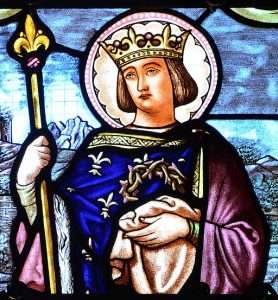
Eglise Saint Louis en L’île
The Saint-Louis-en-l’Île church is located on the Saint-Louis Island at the corner of Saint-Louis-en-l’Île street and Poulletier street. This building was built in several stages from 1624 to 1726. Its patron saint is Saint Louis, King of France. The parish is currently one of the smallest in the diocese of Paris. It covers half of the Île de la Cité, Île Saint-Louis itself and the former Île Louviers (the part between the current Boulevard Morland and the Seine).
Berthillon 29-31 Saint Louis en L’île
Berthillon is a French manufacturer and retailer of luxury ice cream and sorbet, with its primary store on the Île Saint-Louis, in Paris, France. The company is owned and operated by the Chauvin family, descendants of the eponymous Monsieur Berthillon, who from 1954 operated a café and hotel called “Le Bourgogne”. The ice cream shop became famous in 1961 when a French restaurant guide Gault Millau wrote about “this astonishing ice cream shop hidden in a bistro on the Ile Saint-Louis.” They are known for using fresh and high quality ingredients and keep the recipe of their sorbet (i.e. the proportion of milk and egg) secret. Raymond Berthillon, founder of Berthillon, died on 9 August 2014.
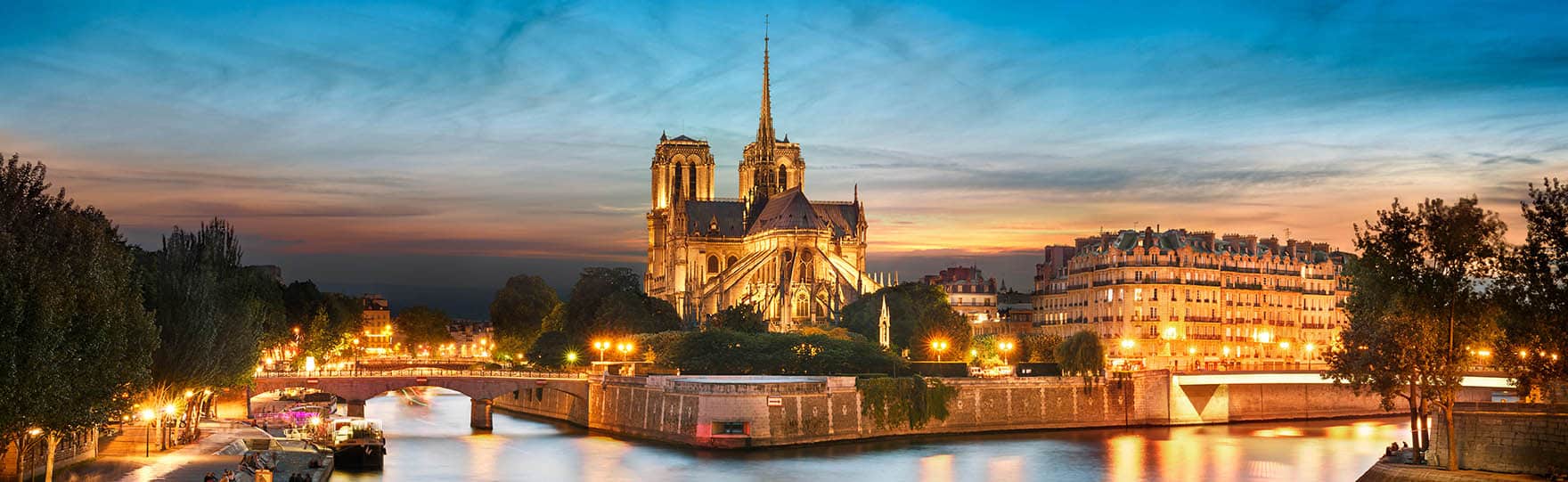
Private Tour of the City Island and Saint-Louis Island
A private tour of Île de la Cité and Île Saint-Louis is not simply another Paris sightseeing activity. It is a journey into the origins of one of the world’s greatest cities. These islands on the Seine River preserve over 2,000 years of history within a remarkably compact space, allowing visitors to experience historical Paris with the ancient Gaul, Roman Lutetia, medieval France, revolutionary turmoil, and modern Paris all within a single walk.
From the majestic towers of Notre-Dame Cathedral to the peaceful elegance of Île Saint-Louis, every corner reveals another layer of Parisian identity. The islands combine architecture, literature, religion, politics, art, and daily life into one extraordinary experience. They are living proof that Paris did not become magical overnight — it evolved slowly through centuries of triumph, tragedy, creativity, and resilience.
What makes these islands unforgettable is not just their beauty, but their atmosphere. They feel alive with memory. Standing beside the Seine as bells ring across the water, visitors realize they are not simply observing history. They are walking through it.
Enjoy the Île de la Cité and Île Saint-Louis private guided tour in Paris to discover the historical Heart of Paris.