

| Picasso in Paris: A Complete Artistic Timeline |
Picasso Private Tour in Paris: A private walking tour in Paris with a licensed guide and Picasso in mind feels like stepping into a living painting where every street corner whispers creativity. This city wasn’t just where Pablo Picasso lived — it was where he transformed from a young struggling artist into one of the most influential figures in modern art history. His journey unfolded across Montmartre, Montparnasse, Saint-Germain, and the Seine, each district shaping a different phase of his artistic evolution.
Private Paris Museum Tour
| Pricing in Euros | Number of people | Duration | Custom Features |
|---|---|---|---|
| From €25 | Per person | Unlimited | Skip-the-line + audio guide |
| From €200 | Per person | 2 hours | Private Museum tour |
| From €1,450 | Up to 6 | Full Day | 2hr museum + 4hr car tour |
| From €1,500 | Up to 6 | 1.5 hours | VIP access & Exclusive Tour |
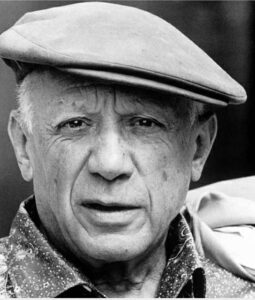
Brief Introduction to Pablo Picasso: Origins, Family Heritage, and Move to Paris
Pablo Picasso, one of the most influential artists in modern history, was born on October 25, 1881, in Málaga, Spain. His full name was Pablo Diego José Francisco de Paula Juan Nepomuceno María de los Remedios Cipriano de la Santísima Trinidad Ruiz y Picasso, reflecting his deeply rooted Spanish and Catholic family background. From an early age, Picasso was surrounded by art, as his father, José Ruiz y Blasco, was a painter and art teacher who specialized in academic and naturalistic painting. His mother, María Picasso y López, came from a family with strong Genoese Italian ancestry, and it was from her side that he adopted the surname “Picasso,” which would later become globally iconic.
Picasso’s artistic talent appeared extraordinarily early. According to family accounts, he began drawing before he could properly speak, and his father quickly recognized his exceptional ability. By his teenage years, Picasso had already surpassed his father’s artistic skill, which led José Ruiz to formally stop painting and fully support his son’s training. Picasso studied at prestigious art schools in La Coruña, Barcelona, and Madrid, where he was exposed to both classical academic techniques and emerging modernist ideas.
Despite his early success in Spain, Picasso felt increasingly restricted by the conservative artistic environment of the country. At the turn of the 20th century, Paris was the undisputed capital of the art world — a city filled with innovation, avant-garde movements, and international artists challenging traditional rules. This cultural energy deeply attracted Picasso.
He first visited Paris in 1900, but his permanent move came around 1904, when he settled in Montmartre. The decision was driven by both ambition and necessity: Paris offered exposure, galleries, collectors, and a vibrant artistic community that Spain could not provide at the time. In Montmartre’s bohemian atmosphere, Picasso found the freedom to experiment, collaborate, and ultimately transform himself into a pioneer of modern art.
Introduction to Picasso’s Paris Journey (1900–1973 Overview)
Picasso’s relationship with Paris isn’t just a biography — it’s a living timeline of modern art itself. From his arrival in the early 1900s to his death in 1973, every district of Paris became a chapter in his artistic evolution. Montmartre gave him rebellion, Montparnasse gave him intellect, Saint-Germain gave him philosophy, and the Marais (today’s Musée Picasso) preserves his legacy. Before diving into the walking tour, it helps to see the full life timeline of Picasso in Paris, because every street you’ll visit connects directly to a specific turning point in his career.

Picasso Private Tour in Paris, Montmartre — Where Picasso Became Picasso
1900–1904: Arrival and Early Struggles in Montmartre
Picasso arrives in Paris for the first time in 1900, then settles more permanently around 1904 in Montmartre. He lives in poverty, moving between cheap studios while absorbing Parisian bohemian culture.
- Moves into Montmartre (1904)
- Meets poets like Max Jacob
- Develops Blue Period (1901–1904) and Rose Period (1904–1906)
- Paris at this time feels like a chaotic canvas — cold winters, warm cafés, and endless artistic competition.
Montmartre was the beating heart of Picasso’s early Paris life, a place filled with cheap rents, wild creativity, and a bohemian spirit that attracted artists from across Europe. It was here that he settled in the famous Bateau-Lavoir, a crumbling but vibrant building that became one of the most important artistic hubs in history. The structure itself was chaotic — dark corridors, shared water, and freezing winters — yet it became the birthplace of revolutionary ideas. This was not luxury; it was survival mixed with genius. Inside these walls, Picasso met writers like Guillaume Apollinaire and fellow painters who would challenge and inspire him. The environment pushed him to break rules, not follow them. Montmartre didn’t just host Picasso — it forged him.
1904–1907: Bateau-Lavoir and the Birth of Modern Art
At the legendary Bateau-Lavoir studio, Picasso enters his most revolutionary phase.
Bateau-Lavoir becomes the epicenter of avant-garde creation.
- Lives and works at Bateau-Lavoir
- Forms circle with Apollinaire, Braque, Stein family
- Paints Les Demoiselles d’Avignon (1907)
- Bateau-Lavoir Studio and Artistic Breakthrough
The Bateau-Lavoir became Picasso’s laboratory of experimentation, where he worked through emotional intensity and artistic rebellion. The studio was famously simple and harsh, but it allowed freedom that traditional academies never could. Here, Picasso developed his most radical ideas, surrounded by conversations that blurred the line between poetry, philosophy, and painting.
This space also marked his transition into proto-Cubism, where structure began to replace traditional realism. The creative energy of the place was so intense that many historians describe it as the birthplace of modern art. Even today, standing near Place Émile-Goudeau feels like stepping into a moment where art history changed forever.
Les Demoiselles d’Avignon and the Birth of Modern Art
It was inside the Bateau-Lavoir that Picasso created Les Demoiselles d’Avignon, one of the most revolutionary paintings ever made. The work shattered traditional perspectives and introduced fragmented forms that would later define Cubism. The painting was initially shocking even to his closest friends, who struggled to understand its raw intensity and distortion.
This piece didn’t just change Picasso’s career — it changed the entire direction of modern art. It blended influences from African sculpture, Iberian art, and classical European painting into something entirely new. The result was chaos on canvas, but also genius in structure. Montmartre gave Picasso the courage to destroy tradition and rebuild it in his own image.
Picasso Private Tour in Paris, Montparnasse — The Bohemian Expansion
1908–1914: Cubism Revolution and Montparnasse Expansion
Picasso moves between Montmartre and Montparnasse, collaborating with Georges Braque.
Key developments:
- Birth of Cubism (1909–1912)
- Development of collage technique
- Frequent meetings at cafés and brasseries
Montparnasse becomes his intellectual battlefield.
1916–1923: War Era, Ballets, and Olga Khokhlova
During WWI, Picasso enters a more international and structured artistic phase.
- 1917: Meets Olga Khokhlova during Ballets Russes project
- 1918: Marries Olga in Paris (Orthodox ceremony)
- 1919–1921: Moves between Paris and European cities
Olga Khokhlova becomes central to his bourgeois transformation.
As Picasso’s reputation grew, his world expanded into Montparnasse, another artistic hub filled with cafés, art galleries, and intellectual debates. This district attracted a new wave of modern artists who were shaping European avant-garde culture. Unlike Montmartre’s raw energy, Montparnasse was more polished but equally rebellious. This is where Picasso’s social and artistic life became more structured, as he engaged with writers, collectors, and rival painters. The cafés became extensions of his studio, where ideas were exchanged as freely as coffee cups.
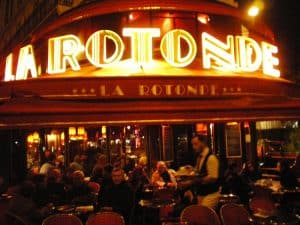
La Rotonde Brasserie and the Intellectual Circle
La Rotonde was one of the most famous meeting points in Montparnasse, where artists like Amedeo Modigliani, writers, and poets gathered daily. Conversations here often turned into heated debates about the future of art, identity, and modern society. Picasso was at the center of these discussions, often both admired and challenged. The atmosphere was electric, almost theatrical, where ideas competed like artworks on a gallery wall. Every table felt like a creative battlefield where reputations were built or destroyed.
Modigliani, Apollinaire, and Artistic Rivalries
Picasso’s circle included figures like Modigliani and Apollinaire, whose presence added intellectual depth and artistic competition. Apollinaire, in particular, was a major supporter of modern art and a close friend who helped promote Cubism. Their conversations often blurred poetry and painting into one shared language.
Rivalries also played a key role. Picasso thrived under pressure, constantly pushing himself to outdo his peers. Montparnasse became not just a place of friendship, but a stage for artistic evolution driven by competition.
The Galleries That Shaped Picasso’s Career
Paris galleries were essential in transforming Picasso from outsider to global artist.
Key names:
- Ambroise Vollard
- Berthe Weill
- Daniel-Henry Kahnweiler
These dealers introduced Picasso to collectors who funded his experiments.
Behind Picasso’s rise were influential galleries that recognized and promoted his work. Dealers like Ambroise Vollard played a crucial role in introducing his art to collectors and critics. Without these galleries, Picasso’s revolutionary ideas might have remained underground experiments.
These spaces were where art met commerce, and where Picasso learned how to navigate fame and financial survival. The relationship between artist and dealer shaped the modern art market as we know it.
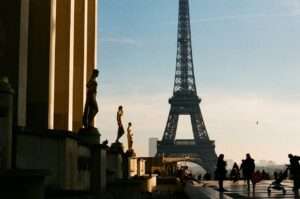
Picasso Private Tour in Paris – Champs-Élysées and the Trocadéro Museum Moment
One of the most transformative moments in Picasso’s artistic journey occurred after visiting the ethnographic displays at the Trocadéro Museum. The experience exposed him to African and tribal art forms that deeply influenced his visual language.
This moment marked a turning point in his artistic philosophy. He began to see art not just as representation but as symbolic power. This influence became central to the development of Cubism and his break from classical European traditions.
Grand Palais Exhibitions and Public Recognition
As Picasso’s fame grew, exhibitions at prestigious venues like the Grand Palais marked his acceptance into the mainstream art world. These exhibitions showcased his evolution from radical outsider to celebrated master.
Public recognition brought both success and pressure, as Picasso navigated the expectations of critics, collectors, and institutions.
Olga Khokhlova and Orthodox Wedding in Paris
Picasso marries Olga in 1918 in an Orthodox ceremony in Paris.
This marks a shift:
- From bohemian life → bourgeois society
- From chaos → structure
- From experimentation → recognition
But emotionally, it also introduces tension that influences later works.
Picasso’s personal life also intersected with Parisian culture when he married Olga Khokhlova, a Russian ballerina. Their Orthodox wedding in Paris symbolized his entry into a more formal and socially elevated world. This relationship introduced a new emotional dimension to his life, contrasting sharply with his earlier bohemian lifestyle. It also influenced his artistic themes, bringing elegance and structure into his work.
Picasso Private Tour in Paris, Parisian Cafés and Literary Friendships
Paris cafés were more than places to drink coffee — they were intellectual headquarters. Picasso spent countless hours in cafés where writers, philosophers, and artists debated the future of culture. These environments influenced his thinking as much as his studio work.
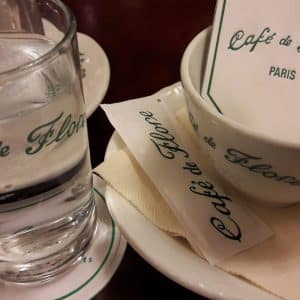
Café de Flore and Brasserie Lipp as Cultural Hubs
Café de Flore and Brasserie Lipp in Saint-Germain-des-Prés became essential stops in Picasso’s Paris life. These cafés were filled with thinkers, critics, and emerging artists discussing everything from politics to painting. The atmosphere was informal but intellectually charged, making them ideal spaces for creative exchange.
Picasso absorbed ideas in these cafés like a sponge, often sketching or planning new works while surrounded by conversation. These locations still preserve that artistic aura today, making them essential stops on any Picasso-themed tour. Saint-Germain-des-Prés became another important chapter in Picasso’s Paris story. The intellectual cafés here were filled with philosophers, writers, and artists shaping post-war culture.
Dora Maar & Les Deux Magots Meeting (1935)
At the café Les Deux Magots, Picasso meets Dora Maar.
- Photographer
- Surrealist
- Emotional influence on Picasso’s darker works
This relationship inspires some of his most psychologically intense paintings.
At Les Deux Magots, Picasso met Dora Maar, a photographer and artist who would become one of his most important muses. Their relationship was intense and emotionally charged, influencing some of his most powerful works. This café remains a symbolic meeting point of art, love, and psychological depth in Picasso’s life.
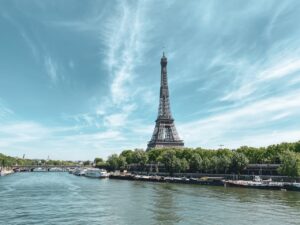
Picasso Private Tour in Paris – Seine River Walks and Artistic Inspiration
Walking along the Seine River offered Picasso moments of reflection away from the intensity of artistic life. The river represented calm in contrast to the chaos of studios and cafés.
Saint-Louis Island and Parisian Atmosphere
Île Saint-Louis provided a peaceful escape within the city, offering inspiration through its architecture and atmosphere. These walks allowed Picasso to process ideas and emotions that later appeared in his work.
Notre Dame and Saint Louis
Notre-Dame Cathedral and Île Saint-Louis are both located on the Seine River in the heart of Paris, forming part of the historic islands that define the city’s center. The river flows directly between and around them, linking these landmarks as key points in Paris’s cultural and geographical landscape.

The Picasso Museum Private Tour in Paris – Le Marais
The Musée Picasso in Le Marais is the ultimate destination for anyone following his Paris journey. It houses an extensive collection of his works, offering insight into his evolving style and creative process. A private tour here feels intimate, almost like stepping inside Picasso’s mind. From early sketches to major masterpieces, the museum captures the full arc of his artistic life.
What’s Inside the Musée Picasso Collection?
According to museum archives, the collection includes:
- 5,000+ artworks
- 200,000 archival documents
- Paintings, sculptures, drawings, ceramics, prints
- Picasso Private Tour in Paris – Paintings Collection
The museum covers every major artistic phase:
- Blue Period works (melancholy themes)
- Cubist masterpieces
- Surrealist experiments
- Late expressive paintings
Highlights include:
- Early self-portraits
- Studies for Les Demoiselles d’Avignon
- Cubist compositions
- Late emotional works from the 1960s
- Archives and Picasso Personal Life
The museum also preserves:
- Letters and sketches
- Photographs
- Sketchbooks
- Personal notes
This makes it not just a museum, but a complete biography in physical form.
Why the Musée Picasso Is Unique
Unlike other museums, this one shows:
- Entire artistic evolution in one place
- Personal belongings of the artist
- Creative process from sketch to masterpiece
It is essentially Picasso’s mind made visible.
Picasso Private Tour in Paris – Walking Through Picasso’s Paris Today
The Picasso private tour in Paris is like walking through the evolution of modern art itself. Every district reveals a different version of him — the struggling artist, the revolutionary thinker, the social figure, and the global icon. His story is deeply tied to the city’s streets, cafés, and studios, making Paris an essential pilgrimage for art lovers. A private tour isn’t just about locations; it’s about understanding how environment shapes genius. Picasso didn’t just live in Paris — he absorbed it, transformed it, and left it permanently changed.
Emy,
FAQs
1. What is the most important Picasso location in Paris?
The Bateau-Lavoir in Montmartre is considered the most important, as it’s where he painted Les Demoiselles d’Avignon.
2. Can you visit Picasso’s studio in Paris today?
The original studio cannot be visited, but its site in Montmartre still exists as a historical landmark.
3. Where is the best Picasso museum in Paris?
The Musée Picasso in Le Marais holds the largest collection of his works in France.
4. Did Picasso live in Montparnasse?
Yes, he frequently spent time there and interacted with artists in its cafés and brasseries.
5. What cafés did Picasso visit in Paris?
Famous cafés include Café de Flore, Brasserie Lipp, and Les Deux Magots.
