

Paris Churches Private Tour with a Licensed Christian Guide
Rejoyce a private tour of Paris churches with a licensed Christian guide expert in theology, religious history and pilgrimage. Explore the Sainte-Chapelle, Notre-Dame cathedral, Saint-Germain-des-Prés‘ ancient abbey, Saint-Sulpice church, and more with a private guide expert in artistic and religious significance of Paris’s most sacred sites. Step into a unique experience with a private tour of the religious paintings in the Louvre. Explore Paris’s most significant Christian landmarks with expert insights and skip-the-line access. Whether you are seeking a spiritual pilgrimage to sacred sites or a cultural exploration of Gothic architecture and religious art, this personalized Christian tour in Paris reveals centuries of faith, artistry, and French history.
Private Tour of Paris Churches with Expert in Theology & Religious History
Bienvenue! I am Emelyne Bonnes, a licensed Parisian private guide and committed Christian. I have been honored to guide Christian travelers from the USA – Catholic, Mormon, Baptist, Episcopalian, Anglican, Presbyterian, Orthodox, and more – including families, couples, organists, and pilgrim groups, some accompanied by Roman Catholic priests from the Vatican. Together, we explore the beauty, history, landmarks, and holy churches of Paris, creating meaningful and deeply spiritual experiences. As a licensed Christian guide with pilgrimage expertise, I reveal:
- Biblical stories depicted in stained glass and sculpture
- Theological significance of architectural choices
- History of Christian Paris from early martyrs to present
- Sacred relics and their religious importance
- Liturgical traditions and worship practices
- Spiritual significance beyond artistic beauty
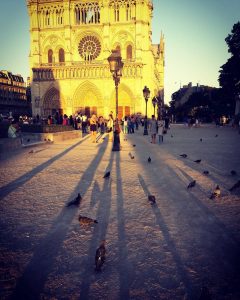
Private Tour of Paris Churches and Christian Heritage
Enjoy a 3-hour Paris churches private tour with a licensed Christian guide. Explore historic churches, and religious landmarks, gaining a deeper understanding of Christian heritage. Faith has played in shaping the culture and history of Paris. This Paris churches private tour offers a peaceful and enriching experience, perfect for travelers interested in spirituality, history, and art, with the flexibility to ask questions and engage in meaningful discussion with your personal guide.
- 3-hour private guided tour from €360
- Licensed Christian guide fluent in English
- Hotel pickup and drop-off at your convenience
- Visit iconic churches and religious landmarks
This unique experience invites you to explore the history of Christianity in the French capital while visiting some of its most meaningful churches and religious landmarks.
Paris Private Tours for Faith-Based Travelers
Paris Churches Private Tour – Highlights and Experiences
Experience the churches of Paris with a licensed guide expert in religious history.
- Discover the relation between the Church, kings of France and the Republic
- Enjoy religious art at the Louvre and Gothic architecture in Paris
- Participate to Ecumenism, movement since late XIXe for Christian Unity
- Exchange in the context of inter-religious dialogue – Vatican Council II
- Discover Christian symbolism, sacred art, and history
- Learn about the spiritual heritage of Paris
As a Christian private tour guide and a Paris travel planner, I thoughtfully caters to the specific needs and interests of Christian travelers through careful planning.
Licensed Art History Guide
Trained at École du Louvre, prestigious art school, in religious art, Gothic architecture, and Christian iconography.
Skip-the-Line Access
Skip-the-line tickets are mandatory for the Sainte Chapelle
Customizable to Your Faith Tradition
Catholic pilgrimage, Protestant Reformation, or ecumenical Christian heritage
Personal, Not Generic
Direct relationship with a licensed guide, 100% private, not mass tourism
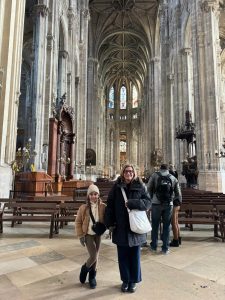
Saint Eustache Paris church
Christian Tour in Paris Perfect For Families & Church Groups
I offer both art historical knowledge and deep understanding of Christian theology, biblical narratives, and sacred symbolism.
- Families wanting faith-based education
- Church groups and religious travelers
- Anyone seeking deeper theological understanding
- Travelers preparing for or reflecting on faith journey
Paris Churches Private Tour for Christian Pilgrims & Art Lovers
Christian heritage tour and churches of Paris private tour are completely customized to your interests. Those private guided tours serve two audiences. Incorporating seasonal festivals or special services into the itinerary provides travelers with the opportunity to witness Paris’s vibrant religious traditions firsthand.
Christian Tour of Paris For Spiritual Pilgrims
Walk in the footsteps of saints, explore sacred relics, discover the Miraculous Medal Chapel, and visit sites significant to Christian history and devotion.
- Discovering the Saints and Christian theologians
- Going to a mass during the week or on a Sunday
- Experience Christian celebrations in Paris churches
- Taking a spiritual retreat within Paris or outside…
Paris Churches Private Tour For Cultural & Art Enthusiasts
Marvel at Gothic architecture, medieval stained glass masterpieces, Baroque organs, and religious art spanning 800 years of French craftsmanship.
- Exploring a Bible Louvre private tour with a Christian guide
- Visiting Paris churches and spiritual hidden gems
- Learning about French history and Christianity
- Uncovering the war between Catholics and Protestants
Christian Tour Paris – Tailored to Your Faith, Devotion & Preferences
Customized private tours for Christian travelers or art lovers, tailored to your specific interests — Marian sites, saint shrines, particular religious orders or historic landmarks.
Includes: Licensed guide, skip-the-line access where available, hotel pickup
Perfect for: Christian pilgrims, religious history enthusiasts, sacred art lovers
- Itinerary built around your faith, preferences and spiritual aspirations
- Flexible transportation — on foot, metro, or private car
- Optional combination with a 4-hour Paris Top landmarks driving tour
- Year-round availability with flexible start times and hotel pickup
3-Hour Sacred Art & Gothic Churches Private Tour
From €360 – USD $375 up to 6 persons
- Sainte-Chapelle (skip-the-line)
- Notre-Dame Cathedral
- Saint-Germain-des-Prés abbey
- Focus: Architecture, stained glass, religious art
Half-Day Private Churches & Pilgrimage Tour in Paris
From €360 – USD $375 for 3-Hour up to 6 persons
- Chapel of the Miraculous Medal
- Saint-Sulpice Church
- Notre-Dame Cathedral
- Focus: Sacred sites, relics, spiritual significance
Full-Day Private Christian Heritage Tour – Paris Churches & Sacred Sites
From €950 – USD $985 for 4 hours with licensed guide and a private driver
- Morning: Sainte-Chapelle + Notre-Dame + Saint-Germain
- Lunch break in a local café or traditional restaurant
- Afternoon: Sacré-Cœur + Miraculous Medal Chapel OR Saint-Denis Basilica
- Focus: Comprehensive Christian history and art
4-Hour Private Tour of Paris Churches
From €850 – USD $885 for 4 hours with licensed guide and a private driver
- Sacred Heart Basilica – Montmartre area
- Notre Dame cathedral – Ile de la Cité area
- Saint Germain des Près church – Saint Germain area
- Sainte Genevieve Relics church – Latin Quarter area
- Saint Eustache church – Les Halles and Le Marais areas
PARIS BY EMY will tailor your experience to your preferences, while giving you the opportunity to learn about sacred art and liturgy, and to explore Paris’s iconic landmarks.
Churches Included in This Paris Private Tour with Emy
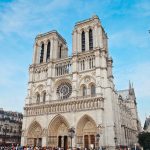
1. Notre-Dame Cathedral Private Tour – A Parisian Gothic Marvel
The Notre-Dame Cathedral, with its awe-inspiring Gothic architecture, stands as one of the most iconic landmarks in Paris. This masterpiece took nearly two centuries to complete. It holds intricate stone carvings, towering spires, and rose windows. Visitors can marvel at its interior, ascend to the top for a panoramic view of the city.
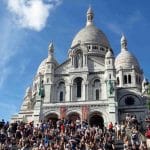
2. Sacred Heart Basilica Private Tour in Paris – Montmartre
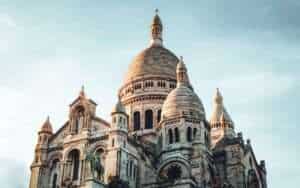
Perched atop the picturesque Montmartre hill, the Sacré-Cœur Basilica offers a stunning panorama of Paris. This white-domed basilica, constructed in the late 19th century, is a symbol of hope and spiritual devotion. Inside, visitors can admire its grandeur and experience a sense of tranquility in its serene ambiance. A climb up its dome rewards visitors with a breathtaking view of the city’s skyline.
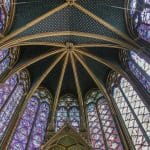
3. Sainte-Chapelle Private Tour – Iconic Stained Glass Windows
Hidden within the Palais de la Cité, the Sainte-Chapelle boasts extraordinary stained glass windows. Built in the 13th century, King Louis IX commissioned it to house relics from the Passion. Go into a world of vibrant colors as sunlight filters through the stained glass, depicting biblical stories.
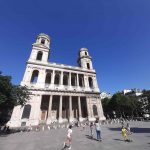
4. Saint-Sulpice Private Tour : The Largest Church of Paris Churches
Saint-Sulpice, a monumental church located in Saint Germain, has an impressive façade and magnificent organ. This 17th-century church offers a serene escape from the bustling city, inviting visitors to admire its artistic treasures. As you wander through its chapels, you can appreciate the skill and dedication that went into creating this masterpiece. Delacroix is one of them. Close to Saint-Sulpice Church, the atmosphere shifts to the literary heart of Saint-Germain-des-Prés, where famous cafés like Les Deux Magots and Café de Flore sit alongside the charming Place Furstenberg.
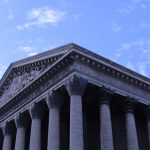
5. La Madeleine Church Private Tour – Architectural Parisian Church
La Madeleine Church, resembling a Greek temple, is a striking sight near the Opera Garnier. Initially designed as a temple to honor Napoleon‘s army, it became a Catholic church. Its grand columns, portico, and interior make it a must-visit destination for those seeking a moment of reflection. Along the way, you can admire the elegant Church of La Madeleine, with its grand classical columns near Place de la Concorde, just steps from the Louvre and the Tuileries Garden.
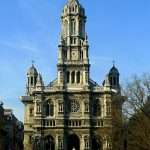
6. Sainte-Trinité Church of Paris Private Tour – Neoclassical Style
Église de la Sainte-Trinité, nestled in the bustling 9th arrondissement, is a testament to architectural harmony. This neoclassical church, designed by Théodore Ballu, combines elements of Greek and Roman architecture with a touch of French influence. Its stunning rose window, dome, and decorations make it a captivating place of worship among different architectural styles in Paris.
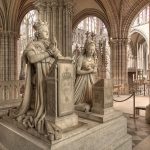
7. Basilica of Saint-Denis Private Tour – Final Resting Place of French Monarchs
Located just outside the city limits, the Basilica of Saint-Denis is the birthplace of Gothic art. This medieval masterpiece, the final resting place of French monarchs, showcases the transition from Romanesque to Gothic architecture. Its intricate stained glass windows, magnificent tombs, and historical significance make it a fascinating destination for architecture aficionados.
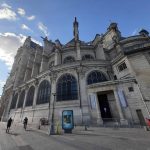
8. Saint-Eustache Paris Church Private Tour
Saint-Eustache Church, situated in the vibrant Les Halles district, is a harmonious blend of Gothic and Renaissance styles. Its impressive façade, towering nave, and grand organ contribute to its architectural allure. The church’s musical heritage is noteworthy, as it hosts regular concerts, enchanting visitors with the power of music. Near Saint-Eustache Church, you’ll reach Rue Montorgueil in the lively Les Halles district—once known as “the belly of Paris”—home to one of the city’s oldest bakeries and the Pinault Collection, a major center for contemporary art housed in the historic Bourse de Commerce.
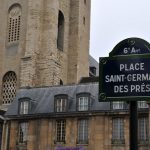
9. Église Saint-Germain-des-Prés Private Tour – Abbey of Saint Germain
Saint-Germain-des-Prés church, located in the charming Left Bank neighborhood, is one of the oldest churches in Paris. Its Romanesque architecture and rich history make it a must-visit for those seeking a tranquil retreat. Explore its medieval chapels, stroll through its charming surroundings, and feel the centuries of history come alive.
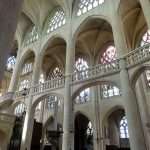
10. Saint-Etienne-du-Mont Church Private Tour in the Latin Quarter
Saint-Etienne-du-Mont church, located near the Panthéon in the Latin Quarter, is a captivating blend of Gothic and Renaissance styles. It has a stunning rood screen, and the final resting place of Blaise Pascal. Explore its intricacies, admire its artistic details, and delve into the intersection of faith and knowledge.
Paris Medieval Christian Art Tour – Private Licensed Guide

Musée de Cluny, also known as the National Museum of the Middle Ages, houses an extraordinary collection of medieval Christian art and artifacts. Explore the museum’s treasury of sculptures, tapestries, and illuminated manuscripts, which offer insights into the spiritual life of the Middle Ages.
The Historic Latin Quarter : Academic Christian Tour

The Latin Quarter, home to the prestigious Sorbonne University, offers a captivating mix of academia and Christian history. Visit the historic Saint-Étienne-du-Mont Church, where the shrine of Saint Genevieve attracts pilgrims seeking spiritual solace and inspiration.
January 3 is the feast of Saint Genevieve of Paris. You can make a “real” pilgrimage to her tomb by going to the Saint-Etienne du Mont church. If we approach the window, we see a damaged oblong stone: it is the base of his primitive sarcophagus, found in the crypt of the church of the Sainte-Geneviève abbey. Her relics are very rare, because her body was burned by the Revolutionaries in 1793.
Christian Heritage Tour of Saint Germain
Le Collège des Bernardins is a jewel of Cistercian architecture in Saint Germain district. Training, debates, research seminars, exhibitions and artistic performances complement each other to promote an authentic, cultural and intellectual dialogue between the Church and society. In a papal bull of 1245, Pope Innocent IV strongly encouraged the Cistercians to study theology and major disciplines in Paris. In 2001, under the leadership of Cardinal Jean-Marie Lustiger. It was finally purchased from the city by the Diocese of Paris.
The Marais: A Haven of Jewish and Christian Coexistence
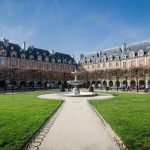
The Marais is a vibrant neighborhood where Jewish and Christian communities have coexisted for centuries. Visit the historic Jewish quarter and explore the remarkable churches Saint-Paul-Saint-Louis. It reflects the harmonious integration of these two religious traditions.
Spiritual Christian Pilgrimage Tour in Paris and Surroundings
Paris is a starting point for various pilgrimage routes, such as the Pèlerinage de Saint-Jacques-de-Compostelle (Camino de Santiago). Explore these spiritual paths that lead to sacred destinations, enabling pilgrims to connect with their faith on a profound level while traversing beautiful landscapes.
Understanding the Needs of Christian Travelers in Paris
Scheduling visits during important Christian holidays offers a unique perspective on the connection between faith and culture in the city. To effectively cater to Christian travelers, it’s essential to understand their preferences and requirements.
Conducting thorough research on common interests and expectations will enable PARIS BY EMY to create a tailored experience that resonates with its guests. Considering the historical and religious significance of Paris adds depth and meaning to your journey.
Embark on a fascinating private and personalized tour that takes you through Paris’s iconic churches, key historical landmarks, and sites connected to the monarchy and the French Republic.
The Chapel of Our Lady of the Miraculous Medal Private Tour
140 rue du Bac 75340 Paris Cedex 07 Métro : Sèvres – Babylone (lignes 10 et 12)
- 1813 Decree of construction under Louis XVIII
- 1815 dedicated to the Sacred Heart of Jesus
- 1832 first medals
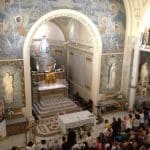
The Chapel of Our Lady of the Miraculous Medal is an important place of prayer and pilgrimage that draws believers from all over the world who wish to prayerfully reflect and ask the Virgin Mary’s protection.
Originally constructed via the imperial decree of King Louis XVIII on 25 March 1813, the chapel was formerly within the Hotel de Châtillon. It was blessed and dedicated to the Sacred Heart of Jesus on 6 August 1815 and served as a part of the motherhouse of the Order of the Daughters of Charity of Saint Vincent de Paul. The chapel is reputed to be where the Blessed Virgin Mary allegedly appeared to then religious novice Catherine Labouré in December 1830. She requested the creation of the medal of the “Immaculate Conception” that came to be known as the “Miraculous Medal” by popular demand.
The Pantheon Private Tour: A Historical Church of Paris
The Pantheon, initially built as a church dedicated to Saint Genevieve, now serves as a secular mausoleum honoring notable French citizens. This architectural masterpiece showcases the grandeur of classical design and invites visitors to contemplate the intertwining of history, spirituality, and human achievements. This shift from religious to secular underscores the dynamic relationship between faith and governance in French history.

The Panthéon is the final resting place of some of France’s greatest minds: Voltaire, Rousseau, Victor Hugo, Émile Zola, and Marie Curie. Each tomb tells a story of intellectual and cultural triumph, reminding visitors that France honors not just its kings, but its thinkers and visionaries. The Panthéon’s dome dominates the Parisian skyline, while inside, murals depict France’s historical and spiritual milestones. Every corner is imbued with symbolism—ideal for those who love history, architecture, and the intersection of art and faith.
Paris Christian Tour – Origins, Identity, and Spiritual Mission
Visiting Parisian churches is a unique journey into history, art, and spirituality. By following simple etiquette such as remaining silent, moving respectfully, dressing appropriately, and avoiding prohibited activities, you enrich your own experience and honor the sacred nature of these spaces. You will be welcomed with open arms to explore the heart of Christian heritage with a private tour guide in Paris. The churches of Paris stand as timeless testaments to the city’s deep-rooted religious and historical significance.
The Apostolic Church and Christian Faith
The Church is a community called in the name of Christ. As God people, the people of the New Covenant in Jesus Christ, the Church is the strength of God Spirit, source of the past, present and future. It is like a Kingdom, a communion between men and God which is the work of the Holy Spirit. By the presence within the Church of the risen Christ, it is a holy place. However, it remains, despite of everything, by its members a human and fragile reality. This Church, willed by Christ, is founded on the 12 apostles, which is why it is called apostolic. The Church takes the form of small communities in Syria, around the year 43. The disciples were given the name “Christians” (Greek word, coming from Christ).
Come & See the Churches of Paris on a Private Tour
Whether it’s attending a Mass at a historic cathedral or participating in a prayer gathering, fostering a sense of community adds depth and meaning to the journey. Paris, the capital of France, has a profound Christian heritage deeply rooted in its history. From majestic cathedrals to hidden chapels and significant religious landmarks, the city offers a wealth of spiritual experiences for visitors. These churches of Paris are sacred spaces for worshippers. While visitors may be drawn to their beauty, remembering that they serve as active centers of faith is essential. Quiet reverence is a simple yet powerful way to show respect. The churches of Paris inspire the soul, reflecting the deep ties between the Church and the Kings of France while also witnessing the birth of the Republic through the Revolution.
Paris Churches Private Tour – Theological Highlights
Saint Eustache church
The church consists of a building dedicated to prayer and to the worship practices of Christians such as the mass said in a church by the priest, in Catholicism and Orthodoxy. The Paris church could be Catholic or Protestant or Orthodox. A large Paris church is Notre Dame de la Croix in the 20th district next to Père Lachaise cemetery where famous people are buried, such as Edith Piaf, Maria Callas, Chopin, Oscar Wilde, Jim Morrisson… In the Père Lachaise, you also have one of the most amazing couples of the Catholics, Héloïse and Abélard, buried together. Discover the Paris church Oratoire du Louvre, a major Protestant church made available to Protestants by Napoleon in 1811 and the surprising little Russian church Saint-Serge de Radonège, attached to the Orthodox Archbishopric of Russian Churches tradition in Western Europe, exarchate of the ecumenical patriarchate of Constantinople.
Paris Basilicas Private Tour: Meaning & Montmartre Landmark
The Basilica of the Sacred Heart
In the Roman Catholic Church, a basilica is a church enjoying a privilege. This term is an honorary title given by the Pope to a church where many faithful come especially on pilgrimage to pray to Jesus Christ, the Virgin Mary or even the relics of a particularly venerated saint. By this honorary distinction, the basilicas take precedence over all the other churches, with the exception of the cathedral of their diocese.
The Basilica of the Sacred Heart is the emblematic monument of Montmartre hill as a sacred place for devotion. The inspiration for Sacré-Cœur’s design originated on 4 September 1870, the day of the proclamation of the Third Republic, with a speech by Bishop Fournier. The Basilique du Sacré-Cœur, perched atop Montmartre Hill, offers breathtaking panoramic views of Paris. This basilica, dedicated to the Sacred Heart of Jesus, welcomes pilgrims from around the world. Explore its majestic domes, interior mosaics, and the serene atmosphere that invites personal reflection and prayer.
Paris Cathedrals Private Tour: Meaning & Notre-Dame Heritage
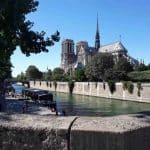
The Cathedral of Notre Dame
A cathedral was originally a church where the seat of the bishop in charge of a diocese is located. It is a symbol of his authority and of his apostolic mission. The cathedral is in use in the Catholic Church, the Orthodox Church, the Anglican Church… The building itself, by its physical presence, symbolises both the glory of God and of the church. A cathedral, its bishop and dignitaries have traditional religious functions, but also are closely associated with the civil and communal life of the city.
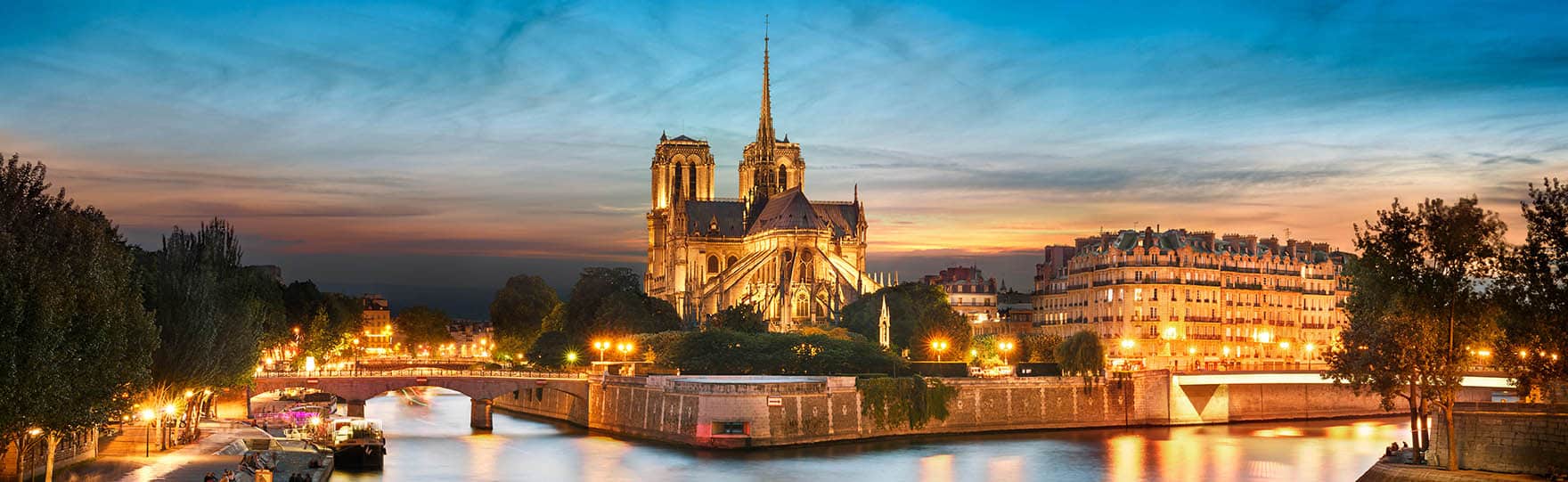
The cathedral of Notre Dame was begun in 1160 thanks to the Bishop Maurice de Sully on the Île de la Cité where used to be a temple dedicated to Jupiter under Tibère emperor, descendants of Ponce Pilate and Jesus. L’ Île de la Cité is a “mother cell” of Paris. The cathedral is completed between 1250 and 1270 under King Saint Louis, though it was modified frequently in the following centuries. The cathedral is known to be one of the finest examples of Gothic architecture. 13 million people visit Notre-Dame yearly, which makes it the most visited monument in Europe.
Paris Churches Private Tour with Fabulous Organs
Within majestic churches of Paris are musical treasures that few visitors discover: the organs. These grand instruments, some centuries old, are not just for playing music—they are living relics of history, art, and faith. If you’ve ever wondered what makes a Parisian church organ so mesmerizing, you’re about to embark on a journey through both sound and spirituality.

Cathedral of Notre-Dame Grand Organ
Why Paris churches are a Paradise for Organ Lovers
The organ has been a cornerstone of Christian worship since the Middle Ages. In Paris, these instruments were crafted by master artisans, blending intricate woodwork with sophisticated mechanics. Many organs still play the music of composers like Franck, Widor, and Vierne, echoing centuries of devotion.
Unique Organ Styles in Churches of Paris
Parisian organs are renowned for their distinct tonal qualities, influenced by French Romantic, Classical, and Baroque traditions. Unlike organs in other European cities, Parisian organs often combine ornate design with powerful acoustics, making each visit both a visual and auditory experience.
Notre-Dame Cathedral Grand Organ
Notre-Dame is arguably the crown jewel of Parisian organs. Its grand organ, with over 8,000 pipes and five keyboards, has been restored multiple times to preserve its majestic sound. Each note resonates through the nave, creating an atmosphere of awe and reflection.
Saint-Sulpice Paris Church and The Aristide Cavaillé-Coll Organ
Saint-Sulpice boasts one of the largest organs in France, built by the legendary Aristide Cavaillé-Coll. Its rich, warm tones can fill the entire church with music that seems to speak directly to the soul. Many famous composers, including Charles-Marie Widor, played here, leaving an indelible mark on the organ’s legacy.
Sainte-Clotilde Basilica Organ Sounds That Stir the Soul
Sainte-Clotilde is often overlooked by tourists, yet its organ is a hidden gem. With its romantic, melancholic tones, it’s perfect for reflective worship and spiritual journeys. Hearing it live feels like a dialogue between heaven and earth.
Saint-Eustache Church of Paris
Saint-Eustache combines Gothic and Renaissance elements, and its organ is a fusion of history and innovation. Its location allows the sound to reverberate beautifully in the vast nave.
Saint-Germain-des-Prés Abbey Paris Church
This abbey is one of the oldest church in Paris, and its organ reflects centuries of musical evolution. Visiting here gives you a sense of walking through history.
La Madeleine Church of Paris
La Madeleine’s organ may be smaller than Notre-Dame or Saint-Sulpice, but its clarity and precision make it a favorite among organists. It’s particularly stunning during evening recitals.
Private Tour of Paris Churches and Royal Christian Heritage
A Christian tour and churches of Paris tour offers a unique lens into the city’s spiritual and historical heart. From majestic cathedrals to hidden chapels, from royal palaces to revolutionary landmarks, this tour allows visitors to experience the layers of Parisian heritage in a way few get to see. Despite the longstanding alliance between the Church and monarchy, the seeds of republicanism began to sprout during the Enlightenment period with Voltaire among others. Ideas of democracy, liberty, and secularism challenged the traditional authority structures, paving the way for revolutionary fervor.

Palais Royal: Learn about its connection to the monarchy
Location : Louvre Rivoli historic landmark
Once the residence of Cardinal Richelieu and later a royal palace, Palais Royal has been at the heart of French political and cultural life for centuries. Louis XIV, the Sun King lived there. It has witnessed royal intrigues, revolutionary plotting, and even the birth of Parisian cafes. Today, it stands as a serene courtyard with elegant arcades, blending royal grandeur with modern accessibility.
The Palais Royal’s gardens and arcades are not just beautiful—they tell a story. Statues of mythological figures, geometrically designed gardens, and historic colonnades offer visitors a glimpse into France’s regal past. The Palais Royal is a living reminder that Parisian architecture is not just about aesthetics—it’s about storytelling.
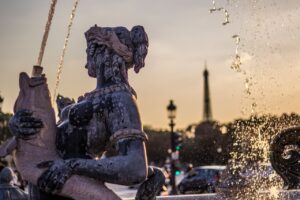
Place de la Concorde: Where the monarchy met its end
Location : La Madeleine Opera historic landmark
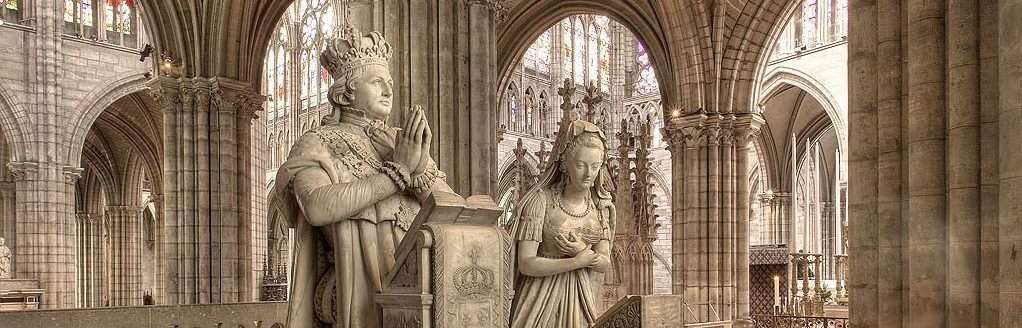
This famous square is infamous for its role in the French Revolution. It was here that King Louis XVI and Marie Antoinette met their tragic end. Walking through Place de la Concorde, you feel the weight of history beneath your feet. The square is a stark reminder of how monarchy, power, and revolution can collide dramatically, shaping the course of a nation.
Today, Place de la Concorde is a bustling hub surrounded by fountains, statues, and grand avenues. It’s a space where history and modern life coexist—a perfect spot to pause and reflect on the dramatic shifts that have shaped France.
Private Tour of the Christian Reformation and Churches of Paris
Uncover the Religious War Between the Catholics and the Protestants in Paris. These conflicts, which took place in the 16th and 17th centuries, shaped the city in profound ways. The religious wars in Paris weren’t just battles fought on the streets; they were conflicts that touched every aspect of life, from politics to economics.
The young Jean Calvin (1509-1564) came to Paris at the age of 14 to study at the Collège de la Marche and then at the Collège de Montaigu on the Montagne Ste-Geneviève, before undertaking law studies in Orléans in 1531. On 1 November 1533, the young rector of the university Nicolas Cop (son of the personal physician of king François 1er) gave an entrance speech at the Mathurins chapel on the theme of the Beatitudes containing allusions to the evangelical martyrs. The text caused a scandal; it had been developed in collaboration with Calvin, and both had to leave Paris. Calvin moved to Switzerland.
The Reformation, in the early 16th century, was a major religious upheaval. Moreover, it led to the rise of Protestantism across Europe. In France, this movement gained traction, particularly among the urban middle class and the nobility. They were drawn to its critique of the Catholic Church’s corruption and its emphasis on personal faith. Protestantism, especially in the form of Calvinism, found fertile ground in Paris, despite strong opposition from the Catholic majority. The city’s intellectuals and artisans were particularly influenced by the new religious ideas. It had been leading to a growing divide between the Protestant minority and the Catholic establishment.
Churches of Paris and Christian Religious Conflicts Tour
While the 1598 Edict of Nantes thanks to king Henry IV brought some level of tolerance. Indeed, it did not fully heal the wounds of the past. In response to the growing Protestant presence during the XVII century, the French monarchy issued a series of edicts. It aimed at suppressing the new faith. These laws ranged from banning Protestant worship to the outright persecution of Protestants. Thus, it was leading to a climate of fear and tension in Paris.
One of the most infamous events of the religious wars was the St. Bartholomew’s Day Massacre in August 24th 1572, where thousands of Protestants were killed in Paris. This massacre, ordered by the Catholic monarchy, was intended to quell the Protestant movement once and for all. However, it only deepened the divisions and led to further bloodshed.
Under king Louis XIV, Sun King of Versailles, edicts gradually banned the “so-called reformers” from most professions. Humiliations, complications, and being sent to the galleys pushed them to practice silently, abjure or emigrate. In 1685, the outcome of this policy led king Louis XIV to revoke the Edict of Nantes by the Edict of Fontainebleau in 1598. He put an end to the coexistence of two religions in the kingdom.
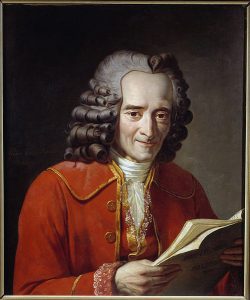
On November 7, 1787, king Louis XVI, under the influence of the Enlightenment’s philosophers and in particular Voltaire, signed the Edict of Tolerance at Versailles, registered by Parliament on January 29, 1788. It was after the French Revolution of 1789 and notably thanks to Napoleon that freedom of worship was acquired and that Protestants were no longer persecuted.
Christian Tour of Paris and the Kings of France
Paris is home to some of the most breathtaking churches, rich in history, faith, and architectural beauty. From the gothic structure of Notre-Dame, famous for its flying buttresses and connection to the Da Vinci Code, to the magnificent Sacré-Cœur, a Catholic Basilica standing at the highest point of Paris, each site holds deep spiritual and historical significance.
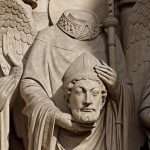
Saint Denis, first Bishop of Paris in the III century
Saint Denis founded around 245 the first diocese of Paris, called Lutetia at that time. For some historians in the 1st century. Indeed, he was the first bishop of Paris sent by the Pope Saint Etienne, to evangelize the Gaul (Kingdom of France). The story of his life and Passion (story of martyrdom) was written throughout the Middle Ages by many biographers. They gradually transformed history into a legend. When Denis arrived in Paris with two disciples, Rustique and Éleuthère, he preached to the inhabitants and converted them to Christianity.
At that time, Christians were persecuted by the Roman authorities and Paris, named Lutèce, was under the Roman control. Arrested by the Romans, Denis and his companions declared themselves Christians and were beheaded in Montmartre, at the bottom of the Sacred Heart Basilica. To prevent their remains from being thrown into the Seine, a still pagan Roman aristocrat, Catulla, decides to bury them in a field of her property. Later, Christians build a basilica in this place, the foundations of the current Cathedral Basilica of Saint-Denis.
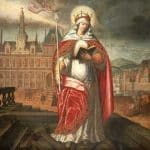
Sainte Patronne of Paris Sainte Geneviève in the V century
Geneviève (around 420 – 500) is a French saint. For more than 1,500 years, Paris has been under the protection of Saint Geneviève who, through her prayers and her courage, saved the capital from famine and destruction many times.
In 451, the Huns threatened Paris. Geneviève persuaded the panicked Parisians that the Barbarians would not attack the city and it was useless to flee. Indeed, Paris is spared. Then, the Franks came to besiege Paris. Geneviève negotiated with the Franks that the city should not be invaded. It also save Christianity while the Western Roman Empire was doomed to disappear and the barbarian people had embraced Arianism.
The siege by the Franks of Paris lasted 10 years, during which Geneviève forced the blockade on the Seine and supplied the Parisian people with wheat. After the victory of Clovis, the last representative of Roman power in Gaul, she allied with the new king and asked him to convert to Christianity. After his baptism, he reconciled the Franks and Gallo-Roman people.
Paris became the capital of his kingdom in 508. Parisians took the habit, whenever a flood, war or epidemic threatened them, to walk the shrine of the saint. A whole protocol governed this ceremony. Relics found in the crypt of the old Sainte-Geneviève church (nowadays the Panthéon) were placed in 1803 in the Paris Church Saint-Étienne-du-Mont church. These relics of the Saint are the last visible in Paris.
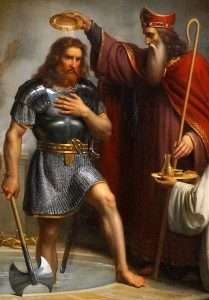
First Christian King Clovis of Paris in the V century
The first King of France (and of Europe) being baptized is Clovis (465-511) in the cathedral of Reims, region of Champagne. Married to Clotilde a Catholic princess, he was baptized by the Bishop of Reims, future Saint Rémi, on Christmas Day between 496 and 498. Therefore, the King must reign in the name of God. He chose Paris as the capital of his French Kingdom. Clovis established the bases of the Monarchy.
Clovis is the first Christian King in the world. It is one of the most important events in the history of the French monarchy and even of the Catholic Church. This baptism in the Cathedral of Reims remained a significant event : from Henri I all the kings of France, except Louis VI, Henri IV and Louis XVIII, are thereafter crowned in the cathedral of Reims until the king Charles X, in 1825.
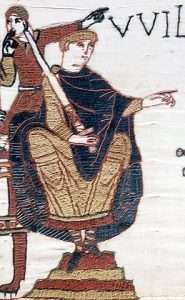
Kings and Christian Tour in Paris – Middle Ages V to XV century
From 987 to 1328, the Kingdom of France was ruled by the dynasty of the Capetian kings with the support of the Church. During 341 years of the Capetians reign with 14 Kings, the kingdom of France went through crusades, land and religious wars to assert their power and authority accross Europe and the East.
The East–West Schism of 1054, was the break of communion between what are now the Roman Catholic Church and Eastern Orthodox Churches. The Schism was the culmination of theological and political differences between the Christian East and West.
William the Conqueror (Guillaume le Conquérant in French 1027-1087), was king of England from 1066 until his death in 1087 and duke of Normandy from 1035 until his death. After the death of King Edward, he took advantage of a succession crisis to seize the crown of England after his victory at the Hastings Battle in 1066. This conquest made him the one of the most powerful monarchs in Western Europe.
Inquisitio hereticae pravitatis Christian Tour in the Middle Ages
On April 20, 1233, Pope Gregory IX entrusted to an exceptional court called Inquisitio hereticae pravitatis the task of unmasking and condemning, heretics and insincere Catholics, by enforcing penalties for people who did not comply with the dogma. Many emperors and kings assimilated the rejection of the official faith to a crime of lese majesty. They did not hesitate to condemn the culprits to the confiscation of their goods, to the prison even to the death. An estimation of 3,000 death sentences according records were executed during its 5 centuries of existence through Europe.
Along with the inquisition, “witch hunting” was a phenomenon more present in Protestant countries such as Germany, England, Danemark, and less in Catholic countries such as Italy and Spain. The last women executed for witchcraft in Europe is Anna Göldin, sentenced in 1782 in the Protestant canton of Glarus in Switzerland. Historians estimate between 40,000 and 100,000 victims of witch hunting.
The Middle Ages is a period in the history of Europe, extending from the 5th century to the 15th century, which begins with the decline of the Western Roman Empire and ends with the Renaissance and the Great Discoveries. Discover the Museum of Cluny, our National Museum of the Middle Ages in the Latin Quarter, close to Saint Germain.
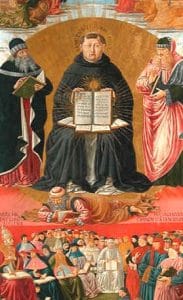
Saint Thomas d’Aquin XIII century in Paris Christian Tour
In 1245, Saint Thomas d’Aquin left Italy, clerical and aristocratic privileges to study & teach at the Sorbonne University. The Sainte Ursule de la Sorbonne chapel is decorated in its external front with four niches each comprising a statue. In the upper left, there is Saint Thomas Aquin Statue.
Founded in 1257 by Robert de Sorbon under King Saint Louis, The Sorbonne is an edifice of the former University of Paris. Today, it houses several high education and research institutions. During the 16th century, the Sorbonne became involved with the struggle between Catholics and Protestants. At that time, Kings, Popes would go to study at the University of Paris for its new ideas, visionary leadership and Excellence.
Saint Thomas became and is an immensely influential philosopher, theologian, and jurist in the tradition of scholasticism. He is also known as the Doctor Angelicus and the Doctor Communis. Thomas Aquinas proposed, in the 13th century, a theological work on an attempt to synthesize reason and faith. He distinguishes truths accessible to a single reason, from those of faith, defined as an unconditional adherence to the Word of God. He qualifies philosophy as a servant of theology (philosophia ancilla theologiæ) in order to express how the two disciplines participate in a “subordinate” way in the search for the knowledge of the truth.
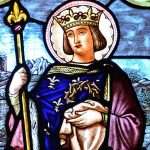
King Saint Louis XIII century – Canonized Christian King of Paris, France
Louis IX dit Saint Louis – King of France of the Capetian dynasty, reigned from 1226 to 1270. Saint Louis was the first to give protection to the Eastern Christians against the Ottoman empire. In 1248, he undertook the 7th crusade to save the Latin kingdom of Jerusalem. During these sumptuous years for the country, he also made himself the protector of justice, of peace and of Christianity, while consolidating his royal power.
The main structure of the new Notre Dame cathedral was completed in 1245 under his reign. Moreover, the relics of Christ crucifixion, the crown of thorns, a piece of the cross and a nail, are brought by Saint Louis from Jerusalem in 1239.
Indeed, on August 19, 1239, the relics arrived in procession in Paris. The king abandoned his royal adornment, put on a simple tunic and, barefoot, wore the crown of thorns to Notre-Dame de Paris. To preserve these relics, he built a monumental reliquary, the Paris church Sainte-Chapelle.
The Sainte Chapelle is well-known for its stunning stained glass. Arranged across 15 windows, each 15 metres high (50 foot), the stained glass panes depict 1,113 scenes from the Old and New Testaments recounting the history of the world until the arrival of the relics in Paris. Saint Louis also had the Sorbonne built in 1257. Louis IX called Saint Louis was the only canonized king of France.

Joan of Arc Christian Tour (1412-1431) & King Charles VII (1403-1461)
During the Hundred Years’ War, Charles VII inherited the throne of France under desperate circumstances. Forces of the Kingdom of England and the duke of Burgundy occupied Guyenne and northern France, including Paris, the capital and most populous city, and Reims, the city in which French kings were traditionally crowned. In addition, his father, Charles VI, had disinherited him in 1420 and recognized Henry V of England and his heirs as the legitimate successors to the French crown. At the same time, a civil war raged in France between the Armagnacs (supporters of the House of Valois) and the Burgundian party (supporters of the House of Valois-Burgundy, which was allied to the English).
With his court removed to Bourges, south of the Loire river, Charles was disparagingly called the “King of Bourges”, because the area around this city was one of the few remaining regions left to him. However, his political and military position improved dramatically with the emergence of Joan of Arc as a spiritual leader in France. Declared a heretic, but still authorized to receive communion, Joan of Arc was delivered to the English, who put her to death on May 30, 1431 on the pyre raised by them on the Place du Vieux-Marché, in Rouen. St. Joan of Arc is a national heroine of France. She was a peasant girl who, believing that she was acting under divine guidance. She is a patron saint of France, honored as a defender of the French nation. Have a private tour in Paris about Joan of Arc.
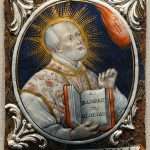
Saint Ignace de Loyola vow in a Paris church – XVI century
Ignatius of Loyola (1491 – 1556) in Rome, was a Basque-Spanish priest and theologian, founder and first Superior General of the Society of Jesus. He assumed considerable tasks in the reaction of the Roman Catholic Church in the 16th and 17th centuries, facing the Protestant reform.
On August 15, 1534, at the end of the mass celebrated in Montmartre in the crypt of the Saint Denis martyrium, he pronounced with 6 other priests the 2 vows of poverty and chastity. It was the first act of an apostolic project giving birth of few years later the Society of Jesus, approved by Pope Paul III in 1540.
Pope Francis (François in French) is the first pope from the ranks of the Society of Jesus, the first non-European pope since the Syrian pope Gregory III in the 8th century. He is also the first pope to take the name of Francis, a name chosen in memory of Saint Francis of Assisi (1181 or 1182 -1226). The Catholic Paris church of Saint-François-d’Assise is located rue de Mouzaïa in the 19th arrondissement of Paris. Saint Francis of Assisi is regarded as the precursor of inter-religious dialogue. Have a spiritual Montmartre private tour.
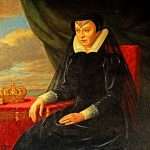
Queen Catherine de’ Medici Christian Tour – religious war in the XVI century
Catherine de’ Medici 13 April 1519 – 5 January 1589) was an Italian (Florentine) noblewoman born into the Medici family. She was Queen of France from 1547 to 1559 by marriage to King Henry II and the mother of French kings Francis II, Charles IX, and Henry III. The years during which her sons reigned have been called “the age of Catherine de’ Medici” since she had extensive, if at times varying, influence on the political life of France.
In France, wars of Religion are called a series of 8 conflicts (civil wars, wars of religion and military operations) which ravaged the kingdom of France in the second half of the 16th century and where Catholics and Protestants (also called Huguenots ) opposed.
The spiritual Protestant was Jean Calvin, French theologian, pastor and reformer. The St. Bartholomew’s Day massacre (French: Massacre de la Saint-Barthélemy), unleashed on the night of August 24, 1572 in Paris, is the culmination of the political and religious crisis which has opposed Catholic elites to Protestant elites for ten years.
Historians have long remained divided on the exact role of the crown. The historical tradition made King Charles IX 4th king of the Valois-Angoulême family and his mother, Catherine de Medici, the main culprits of the massacre. In Paris, the executions of thousands of Protestants by Catholics take place over several days in Paris. The signal given from the Paris church Saint Germain l’Auxerrois, a Paris church near by the Louvre. Have a private guided tour of the Louvre Rivoli district.
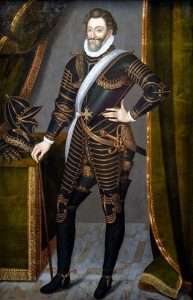
The Edit de Nantes by King Henri IV in the XVI century
Another major event is the Edit de Nantes by King Henri IV. To access the throne, Henri de Navarre Protestant Chief at that time, had to convert to Catholicism. On July 25, 1593 Henri de Navarre abjured Protestantism for the last time in Basilica of Saint-Denis, near Paris. The basilica became a place of pilgrimage and the burial place of the French Kings with nearly every king from the 10th to the 18th centuries being buried there. This condition fulfilled, he ends up imposing himself as king of France under the name of Henri IV, installing a new dynasty, that of Bourbons.
The Edict of Nantes is an edict of tolerance promulgated in April 1598 by the King of France Henry IV, to put an end to the Wars of Religion which had ravaged the Kingdom of France since 1562, and particularly to the Eighth War, which began in 1585. Thanks to the Edit de Nantes, Henri IV ended decades of civil war, pitting Catholics against Protestants. It is undoubtedly the most important act of his reign.
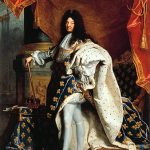
Paris church – Edit de Nantes revocation by Louis XIV in the XVII century
Louis XIV, known as “Louis the Great” or “the Sun King”, (1638-1715) is a king of France. His reign of 72 years is one of the longest in the history of Europe and the longest in the history of France. From 1682, Louis XIV ruled his kingdom from the vast Palace of Versailles.
On October 18, 1685, Louis XIV, the Sun King, the 44th king of Navarre and the third king of France from the Bourbon dynasty, signs the Edict of Fontainebleau. This act, which revokes the Edict of Nantes signed on April 13, 1598 by Henri IV, his grandfather, prohibits the existence of the Protestant cult in France. The Sun King, eager for absolutism and centralization, tried to stifle the practice of Protestant worship. After “Moderate Politics”, it will authorize persecution, causing a demographic hemorrhage, disastrous for the country’s economy and which will weaken the kingdom.
In Versailles, the Royal Chapel was completed at the end of the reign of Louis XIV in 1710. Dedicated to Saint Louis, patron saint of the King, the royal Chapel echoes the Sainte-Chapelle Paris church built under Saint Louis king. Have a Versailles private tour from Paris.

Christian Tour in Paris During the French Revolution
The French Revolution from 1789 caused a massive shift of power from the Roman Catholic Church to the State. Under the monarchy, the Church had been the largest single landowner in the country. In addition, the Church was exempt from paying taxes to the government, while it levied a tax often collected in the form of crops on the people. Louis XVI died with the guillotine on January 21, 1793. Nine months later, Marie Antoinette was also convicted of treason and beheaded on October 16.
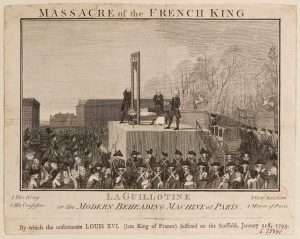
The French Revolution brought the Republic model, in which power is exercised by elected persons. Slavery by royalty and clergy on people (named the serf) and their privileges have been dismantled. The prohibition of trafficking only intervened in 1815. Slavery was definitively abolished in Paris, in the Council of Government, by the decree of Victor Schœlcher who decided the abolition of slavery in France and in its colonies, on April 27, 1848. It also decriminalized homosexual relations as early as 1791. Moreover, France was the first to grant full equal rights to Jews through the vote of the Constituent Assembly in 1791 at the start of the French Revolution. Enjoy a French Revolution private tour.
The Terror in Paris Churches during the French Revolution
During the Revolution’s Reign of Terror, the project of de-Christianisation started, including the imprisonment and massacre of priests, religious, royalists or not royalists and destruction of churches and religious images throughout France.
The Picpus cemetery is one of 2 private cemeteries of Paris, with graves from the French Aristocraty. It was dug in June 1794 in the garden convent. In 6 weeks, the guillotine killed more than 1,306 people. Overall, several tens of thousands are guillotined, shot or drowned.
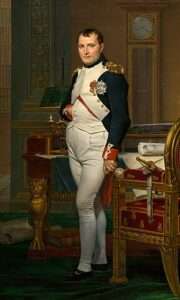
Churches in Paris – Freedom of religion Napoléon 1802
The Terror ended on 9 thermidor year II (July 27, 1794) with the fall of Robespierre. Then, the coup d’état (putsch) on November 9, 1799 took place with the following operations : Napoléon Bonaparte will be commander in Chief of the Army in Paris and in the assemblies. Napoleon coronation as an Emperor, first Emperor of France, on December 2, 1804 took place in Notre Dame Cathedral. Napoléon ended the de-Christianisation. He established the rules for a relationship between the Catholic Church and the French State. In 1802, with the Concordat signed with Pope Pius VII, Napoléon Bonaparte restored freedom of worship. He saw that religion was necessary for the balance of people. Napoléon Bonaparte declared on August 16, 1800:
“My policy is to govern men. This is, I believe, the way to recognize the sovereignty of the people. It was by making myself Catholic that I won the war in Vendée, by making myself Muslim that I established myself in Egypt, by making myself ultramontane that I won minds in Italy. If I ruled a Jewish people, I would restore the Temple of Solomon. “
La Madeleine Paris church, dedicated to Saint Mary Magdalene is a Roman Catholic church in the 8th arrondissement of Paris. Napoleon wanted the Madeleine Church as a temple to the glory of the army. However, he gave it back to the glory of God in 1813.
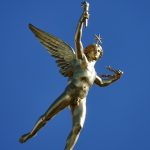
Christian Tour in Paris – The Republic and the Church
The République is the form of government in force for the first time in 1792 after Bastille Day. The French Revolution of 1789 then interrupted the republic from 1804 to 1848. Indeed, Napoléon Bonaparte becoming Emperor with the coming back of the constitutional monarchy.
The Second Republic interrupted from 1852 to 1870
Second republic then interrupted from 1852 to 1870 with Louis Napoléon Bonaparte, Napoléon III (nephew of Napoléon Bonaparte) second empire. Not respecting his promises to Christians, in 1860, the sultan exercised bloody repression against the Lebanese Maronites, Eastern Christians. For Napoléon III, it was a provocation. An expeditionary force embarked for the current country Lebanon. A year later in 1861, a special status is obtained from Istanbul, with the designation of a Christian governor.
The Communard movement in 1870 against the Paris Churches
The Commune of Paris finds its source in a republican impulse referring to the First Republic and Second Republic. Napoleon III and Baron Haussmann, note more than half of Parisians live in “poverty bordering on indigence”. In July 1870, the Second Empire began an ill-prepared war against Prussia, which quickly led to defeat. On September 4, 1870, a day of riots in Paris overthrown the Empire.
The communard movement was born following an uprising of Parisians on March 18, 1871. Dominated by the extreme left, the communard are Jacobins, Marxists, independent Blanquists and anarchists.
The Communards want a federalist, democratic and social republic with absolute autonomy for the communes of France. They also wanted a separation of Church and State. However, from Versailles, the propaganda of Adolphe Thiers provoked the rejection of the movement in the countryside.
In the final battle of Bloody Week on May 28, 1871, hundreds of Communards were killed. At the same time, the Paris Commune provoked bloody religious persecutions. They used the clergy as bargaining chips. The Versaillese executed around 20,000 communards. Out of 36,000 communards arrested, 4,500 imprisoned. 7,500 deported (mainly to New Caledonia). 10,000 convictions pronounced, including 93 to capital punishment. Indeed, 23 were carried out.
Separation of Church and State in 1905
In the aftermath of the revolution, Napoleon Bonaparte sought to reconcile with the Catholic Church through the Concordat of 1801. This agreement restored some of the Church’s privileges while reaffirming state control over religious affairs, laying the groundwork for a new era of church-state relations.
Subsequent governments pursued policies of secularization, aiming to diminish the influence of religion on public life and promote a more inclusive society. Laws such as the 1905 Law of Separation of Church and State formalized the secular nature of the French Republic.
3rd and 4th Republic interrupted from 1940 to 1944
The law concerning the separation of the Church and the State is adopted on December 9, 1905. Indeed, it was on the initiative of the republican-socialist deputy Aristide Briand, who took sides in favor of a laicism.
Finally, Paris Vichy government during WW2 interrupted the Third republic from 1940 to 1944. The Fourth Republic followed.
The Fifth Republic since October 4, 1958
The Fifth Republic is in force since October 4, 1958 by Charles de Gaulle, elected its first president. General de Gaulle came from a very religious family. He was educated in private Catholic schools, notably at the Collège Stanislas where his father, Henri de Gaulle, taught. In power, he was careful to maintain close relations between the French Republic and the papacy. Paris churches reflect our history and culture. They tell a story of France, faith, artistry. Moreover, Parisian churches tell the evolution of architectural styles. If you seek spiritual solace, these churches offer a unique perspective on the city’s cultural tapestry.
Paris Churches Private Tour – Discover Christian Denominations and Heritage
If you are looking for Christian tours in Paris that explore the city’s diverse denominations and historic churches, PARIS BY EMY offers fully customized private experiences designed to reveal Paris’s rich Christian heritage. These Paris church private tours provide insight into the history, architecture, and spiritual traditions of Christianity across centuries.
Amid the grandeur of this captivating city lies a remarkable tapestry of faith, culture, and sacred art. A private churches of Paris tour invites visitors to discover centuries-old sanctuaries, hidden religious gems, and profound spiritual traditions. Join us on a journey through the religious heritage of Paris and experience the city’s Christian diversity. Here is an overview of what you may discover during your Christian tour of Paris:
1. Catholic Paris Churches Private Tour
As the predominant Christian tradition in France, Catholicism is central to Paris’s spiritual history. Your private tour may include iconic landmarks such as Notre-Dame Cathedral and Sacré-Cœur Basilica. PARIS BY EMY provides rich historical context on Catholic influence in Paris and its role in shaping the city’s religious identity. Emy is Catholic, offering personal insight into this tradition.
2. Protestant Paris Churches Private Tour
Explore Paris’s Protestant heritage through historic sites such as the Église protestante unie de l’Étoile and the Église Réformée de l’Oratoire du Louvre, one of the most significant Reformed churches in France. Learn about the Reformation, the history of the Huguenots, and the development of Protestantism in Paris.
- Église protestante unie de l’Étoile
- Église Réformée de l’Oratoire du Louvre
3. Baptist Paris Churches Private Tour
Discover the Baptist tradition with visits to churches such as the Église Baptiste du Tabernacle. This experience highlights the growth of Evangelical Christianity in France and the global Baptist movement, particularly from the 19th century onward.
4. Orthodox Paris Churches Private Tour
Experience Eastern Christianity through visits to churches such as Saint-Séraphin-de-Sarov Russian Orthodox Church or the Greek Orthodox Church of Saint-Stephen. These sanctuaries reveal the beauty of Orthodox iconography, liturgy, and the immigrant communities that established them in Paris.
5. Anglican Churches of Paris Private Tour
Churches such as St. George’s Anglican Church and the American Cathedral in Paris offer insight into Anglican tradition and its deep ties with British and American expatriate communities in the French capital.
6. Episcopal Paris Churches Private Tour
The American Cathedral in Paris, one of the best-known Episcopal churches in Europe, showcases Gothic Revival architecture and a vibrant English-speaking congregation. It reflects the long-standing presence of American Christianity in Paris.
7. Armenian Paris Churches Private Tour
The Église Arménienne Saint-Jean-Baptiste represents the Armenian Apostolic Church in Paris. Visitors learn about the Armenian Christian diaspora and its history in France, particularly following the Armenian Genocide.
8. Coptic Orthodox Paris Churches Private Tour
The Coptic Orthodox Church is one of the world’s oldest Christian traditions, tracing its origins to Egypt and Saint Mark the Apostle. In Paris, Saint Mary and Saint Mark Coptic Orthodox Church serves as a spiritual center for the Egyptian Coptic community.
The Coptic liturgy, celebrated in Coptic and Arabic, is rich in ancient hymns, incense, and symbolic iconography. Visitors interested in early Christianity and Eastern liturgical traditions will find this experience deeply immersive. The Coptic Church has played a crucial role in preserving Egypt’s Christian heritage through centuries of challenge and persecution.
9. Lebanese Maronite Paris Churches Private Tour
The Lebanese Maronite Church represents Lebanon’s Eastern Catholic heritage in Paris. The main place of worship for the Maronite community is Saint-Maroun Cathedral, located in central Paris. Part of the Maronite Catholic Church—one of the oldest Christian communities—this tradition originates in Lebanon and preserves Eastern liturgy within communion with Rome.
10. Evangelical Churches of Paris Private Tour
Evangelical churches in Paris reflect the diversity and vitality of modern Protestant Christianity. Various congregations across the city gather believers from many cultural backgrounds. Emphasizing personal faith, biblical teaching, and vibrant worship, Evangelical Christianity forms a dynamic branch of Protestantism and contributes to the contemporary Christian landscape of Paris.
Eastern Christian Heritage in Paris – L’Œuvre d’Orient
L’Œuvre d’Orient is a major Paris-based association dedicated to supporting Christian communities in the Middle East and preserving their cultural and religious heritage. Through events, exhibitions, and conferences, the organization raises awareness about Eastern Christian traditions and the challenges faced by communities in countries such as Syria, Iraq, Lebanon, and Egypt.
In Paris, visitors can also discover Eastern Christian heritage through Coptic and other Oriental churches, as well as cultural initiatives linked to Christians of the East. These encounters deepen understanding of ancient Christian traditions and their living presence in the French capital.
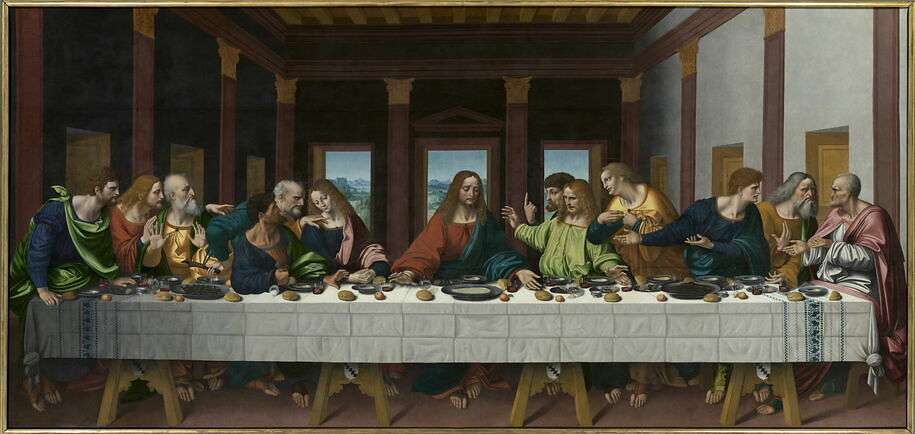
La Cène (XVIe siècle) Italie Ecole de Marco da Oggiono, Musée du Louvre Collection, En dépôt : Musée national de la Renaissance – Château d’Ecouen
Copy after Leonardo da Vinci‘s Last Supper
Insightful Commentary during Your Christian Tour in Paris
As a Catholic woman and licensed private tour guide in Paris, Emy is passionate about giving a Christian tour of Paris sharing her faith with Christian travelers. These are her “10 Commandments” :
1- Loving God in Paris by living a shared experience
2- Glorify the Faith of travelers in search of God
3- Welcome travelers as they are in their Faith
4- Patronize travelers to the liturgy in Parisian churches
5- To amaze travelers in their thirst for God
6- Reviving the Faith of travelers in search of God
7- Answer questions from travelers in their spiritual battle
8- Living together the Love of Christ in prayer and meditation
9- Discover the history of the Church of France in the Parisian way
10- Take inspiration from Saints and theologians of Paris, France
Since 2018, PARIS BY EMY has warmly hosted numerous Christian families, couples, and pilgrims.
Reminder When Visiting the Churches of Paris – Remain Silent
From the gothic marvel of Notre-Dame to the hilltop serenity of Sacré-Cœur, these holy sites invite millions of visitors every year. But with beauty comes responsibility. When you step into these sacred spaces, you’re not just entering a tourist attraction, you are entering a living, breathing place of worship.
- Remain SILENT upon arrival and especially inside the church
- Move around the chapel only outside of celebration times
- Take photos without flash and no picture of Eucharistic celebrations
- Turn off your cell phone or put it on silent – mandatory
- Wear appropriate attire and behavior
- Eating and smoking are prohibited
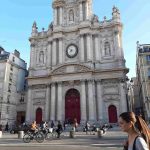
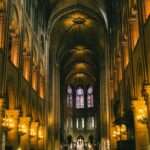
These churches are sacred spaces for worshippers. While visitors may be drawn to their beauty, remembering that they serve as active centers of faith is essential. Quiet reverence is a simple yet powerful way to show respect. By respecting these sites, you honor not just the spiritual but also the cultural heritage of France.
- No matter what is your religion, you can enter Paris Churches
- It does not matter if you are not a believer. You come and see
- You do not visit a church like you visit a museum because it is a holy place
- Shoulders covered – Knee-length or longer skirts/pants – No offensive prints
- Respect local customs like genuflecting before the altar or offering donations quietly
- Avoid loud conversations, no telephone conversation, and unnecessary photography
A little mindfulness goes a long way in honoring the local culture.
Christian Tour Paris & Spiritual Experiences
PARIS BY EMY welcomes you to explore a spiritual journey in the heart of Paris. Our Christian tours combine history, art, architecture and devotion. It will guide you through sacred sites, churches, and neighborhoods.
Inspired by the words of Pope Francis during World Youth Day 2023 in Lisbon, Portugal:
“We need saints without veils, without cassocks.
We need saints in jeans and sneakers.
We need saints who go to the movies, listen to music
and hang out with their friends.
We need saints who put God first
and who stay at university for a long time.
We need saints who find time each day to pray and
who know how to date someone in purity and chastity,
or who consecrate their chastity.
We need modern saints, 21st century saints
whose spirituality is in tune with our times.
We need saints who are committed to the poor and to necessary social changes.
We need saints who live in the world, who sanctify themselves in the world and who are not afraid to live in the world.
We need saints who drink coca-cola and eat hot dogs,
Who use the Internet, who listen to iPods.
We need saints who love the Eucharist and who are not ashamed to have a beer or a pizza on the weekend with their friends.
We need saints who love cinema, theater, music, dance, sports.
We need saints who are sociable, open, normal, friendly, cheerful, companions.
We need saints who are in the world and who know how to savor the pure and good things of the world, but without being worldly.”
On this Christian tour of Paris, you can experience this modern spirituality firsthand. Visiting historic churches, discovering religious art, and connecting with the city’s Christian heritage is a meaningful and inspiring tour. A private tour of Paris churches is a transformative experience. It allows visitors to immerse themselves in the spiritual and historical riches of the city. From majestic cathedrals to renowned landmarks, Paris offers a profound journey of faith and cultural exploration.
- Christian Unity tour to Paris churches and historic landmarks
- Private guided tour of Christian art at the Louvre museum
You can ask PARIS BY EMY to create a custom-made private tour. Choose historical districts, and Paris churches, according to your preferences. Uncover the factual bond between the churches of Paris, Kings of France and the Republic while discovering Paris. Have a look at the private tours in Paris with expert guides page.
Frequently Asked Questions
Is this a religious pilgrimage or cultural tour?
Both! The tour adapts to your interests. Spiritual pilgrims receive devotional context and sacred history. Cultural enthusiasts explore art, architecture, and historical significance. Many visitors enjoy both perspectives.
What Christian sites are included?
Tours are customized but typically include Sainte-Chapelle, Notre-Dame, Saint-Germain-des-Prés, and either Sacré-Cœur or the Miraculous Medal Chapel. Full-day tours can add Saint-Denis Basilica.
Can we attend Mass during the tour?
Yes, tours can be scheduled around Mass times at major churches if you wish to participate in services.
What denominations is this tour suitable for?
Primarily Catholic sites, but tours can be adapted for Protestant, Orthodox, or general Christian heritage interests.
Do I need to be religious to enjoy this tour?
No. Many guests are art lovers, history enthusiasts, or cultural travelers interested in Gothic architecture and religious art without religious affiliation.
Is skip-the-line access included?
Yes, VIP skip-the-line tickets to Sainte-Chapelle and other sites where available.